The Universe Is Mostly Space
The universe is overwhelmingly empty. Look at the night sky — vast stretches of darkness between points of light. The gaps between stars dwarf the stars themselves. Galaxies are separated by millions of light-years of apparent nothingness. And zoom in to the smallest scale: even the densest matter you can touch is, at the atomic level, overwhelmingly void.
Reality, at every scale, is mostly space.
So here's a question worth asking: if reality is mostly space, and geometry is the mathematics of space — what shape is the universe?
Because space isn't featureless. It has structure. It has rules. And those rules are geometric — the same geometric principles that Euclid wrote down over two thousand years ago, and that science relied on for most of its history.
This is the story of that geometry: how it once stood at the centre of our understanding of nature, how science gradually moved beyond it, and what we've discovered by returning to it.
Geometry Was Science
For most of human history, geometry wasn't a branch of mathematics. It was mathematics — and it was the primary tool for understanding the physical world.
Pythagoras (c. 570 BC) discovered that musical harmony comes from geometric ratios. Halve a vibrating string: the octave. Divide by three: the fifth. He concluded that the cosmos itself is built from proportion — that mathematics isn't abstract, but the actual structure of reality.
Plato (c. 360 BC) took this further. He argued that all matter is built from five perfect geometric solids — shapes where every face, edge, and angle is identical. The tetrahedron (fire), cube (earth), octahedron (air), icosahedron (water), and dodecahedron (the cosmos). These five forms are not arbitrary — they are the only perfectly regular solids that three-dimensional space permits. A mathematical inevitability.
Euclid (c. 300 BC) formalised all of this into the Elements — a work that remained the foundation of mathematics for over two thousand years, longer than any other scientific text in history.
Kepler (1596) tried to explain the spacing of planetary orbits by nesting the five Platonic Solids inside each other. His specific model was wrong, but his instinct was remarkable: the architecture of the solar system should be derivable from geometry alone.
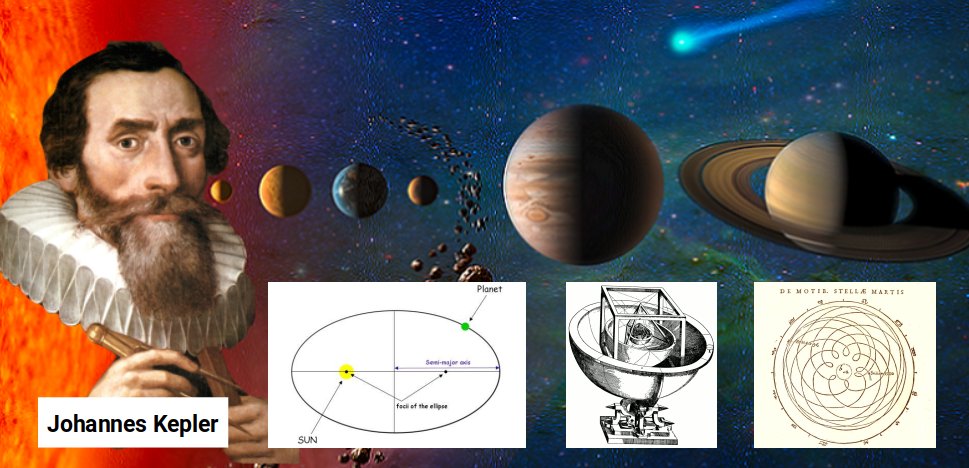
Newton (1687) proved the laws of gravity using geometric reasoning. The Principia — the most influential scientific work ever published — is a book of geometric proofs, not algebraic equations.
Nor was this conviction limited to Europe. Ancient cultures across the world — from the mandalas of Hindu and Buddhist traditions to Islamic tessellations and the geometric symbolism of Egyptian temples — independently recognised the same sacred geometric patterns as expressions of universal order.
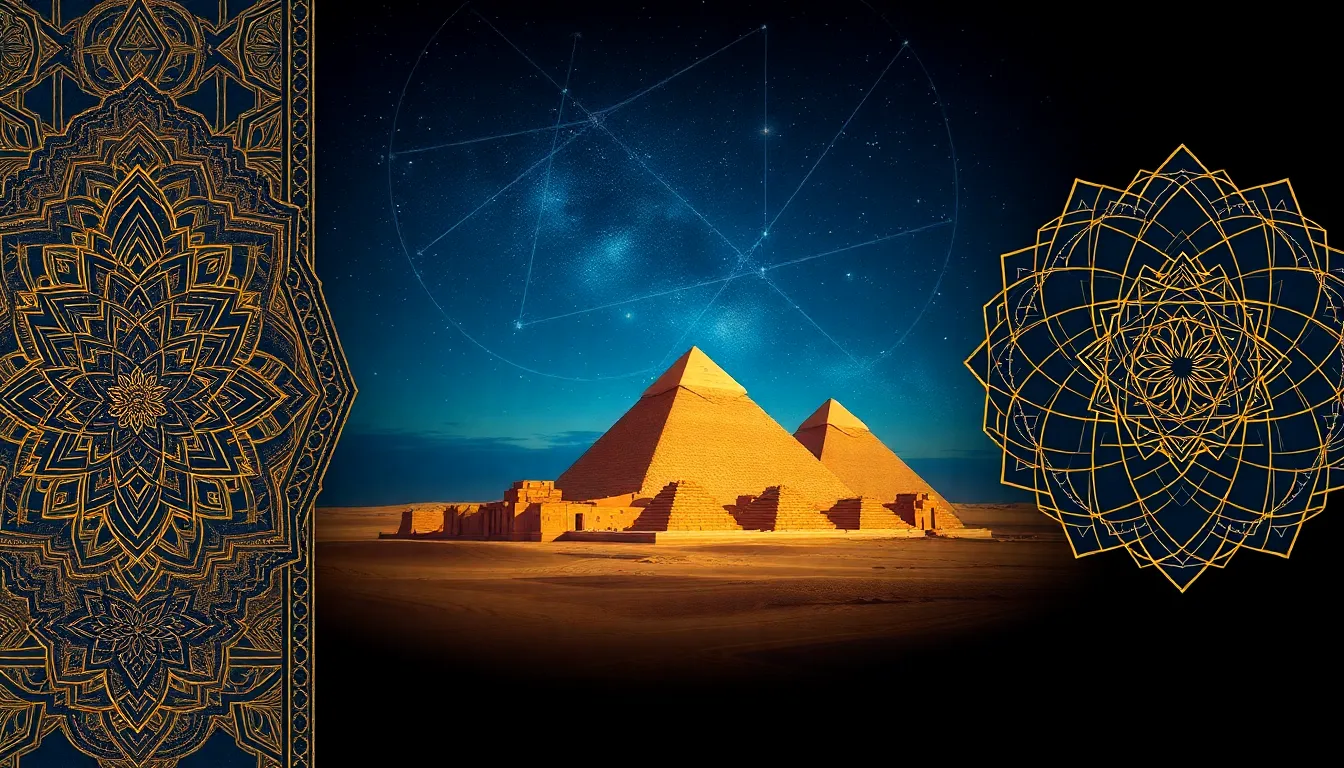
For two thousand years, the greatest minds in science shared a conviction: the universe is built from geometric principles, and to understand those principles is to understand reality itself.
Losing the Picture
Then, gradually, the geometric thread was dropped.
Newton's own invention — calculus — replaced geometry as the language of science. Where geometry works with shapes, ratios, and visual reasoning, calculus works with equations, limits, and infinitely small quantities. It was extraordinarily powerful. But it was also a different way of thinking — abstract rather than visual, symbolic rather than spatial.
By the nineteenth century, mathematics had moved far beyond anything you could draw. Physics still assumed that light and electromagnetic waves travelled through a geometric medium — the Luminiferous Aether, a structured substance filling all of space. Nikola Tesla built his inventions on this assumption. Then in 1887, Michelson and Morley tried to detect the Aether and found nothing. The idea was abandoned. The last geometric structure was removed from physics.
Einstein (1905–1915) showed that space and time are woven together and can curve. This was one of the great insights in the history of science. But to describe curved spacetime, physics adopted Riemannian geometry — a mathematics of surfaces that bend and stretch in ways no human mind can visualise. The universe became mathematically precise but geometrically invisible.
Quantum mechanics (1920s–1930s) went further. At the atomic scale, particles behave as both waves and particles simultaneously. An electron has no definite position until you measure it. The equations predict experimental results with extraordinary accuracy — but no one can picture what they describe. As Richard Feynman said: "Nobody understands quantum mechanics."
Science had become incredibly powerful. But it had lost the picture.
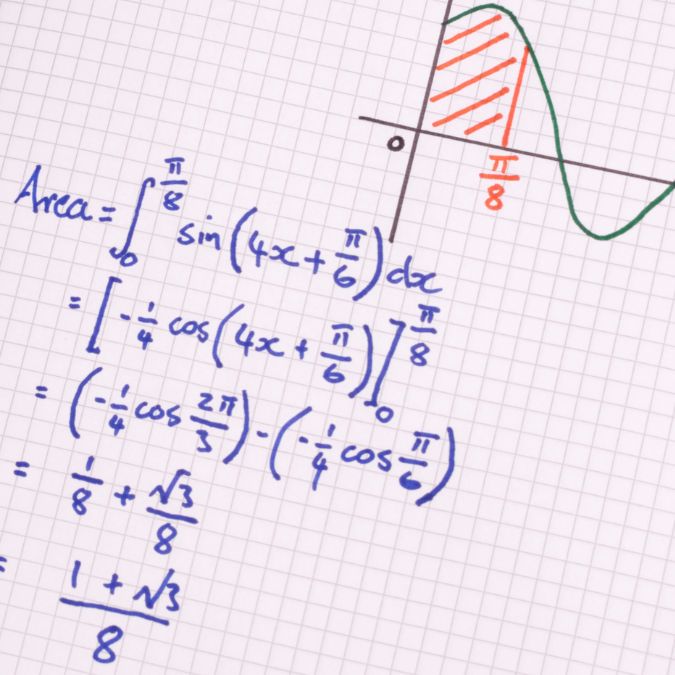
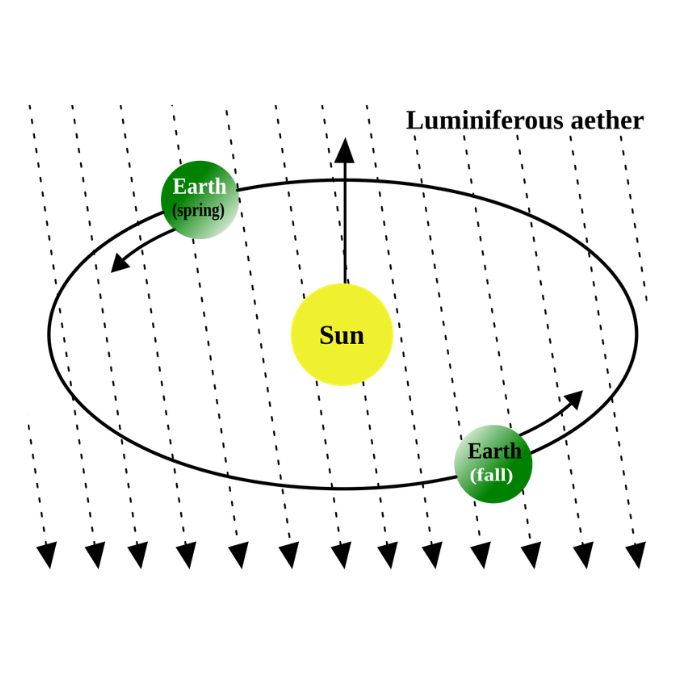
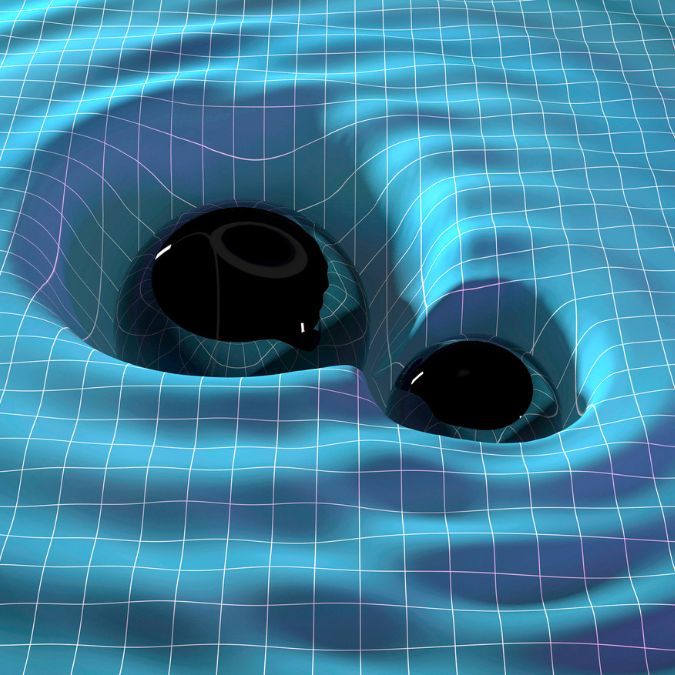
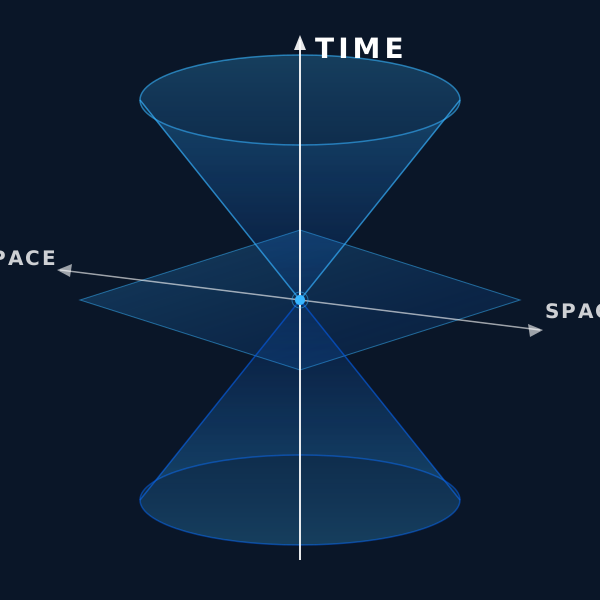
And without that picture, the problems began to mount.
The Paradoxes
In physics, the wave-particle duality has persisted for a century without explanation. The measurement problem — why does observing a quantum system change its state? — remains one of the deepest open questions in science. And the two greatest theories in physics — general relativity and quantum mechanics — flatly contradict each other. They use different mathematics, different assumptions, and different descriptions of what reality is. Unifying them has been the central unsolved problem of theoretical physics for over a hundred years.
In cosmology, when astronomers measured how galaxies rotate, they found that galaxies spin too fast for the visible matter they contain. Rather than question the gravitational model, physics introduced dark matter — an invisible substance that has never been directly detected. The accelerating expansion of the universe required another invention: dark energy. Together, these two undetected substances are said to constitute 95% of the universe. Only 5% is the ordinary matter we can see and measure.
In mathematics, the problems run even deeper. Bertrand Russell discovered in 1901 that the foundations of logic contain a contradiction: a set that both contains and doesn't contain itself. The Russell Paradox shook mathematics to its core and has never been fully resolved. Georg Cantor's work on infinity led to the Continuum Hypothesis — a question about whether there are sizes of infinity between the countable and the uncountable. In 1963, Paul Cohen proved this question is undecidable within standard mathematics. The foundations of maths are, in a rigorous sense, incomplete.
This is the deepest paradox of all. Physics rests on mathematics. And mathematics itself — the abstract, non-geometric framework that replaced Euclid — is provably incomplete.
But what if the answer was hiding in plain sight all along?
Look Around
In the 1970s and 1980s, Benoit Mandelbrot and others discovered fractal geometry — shapes that repeat the same pattern at every scale. A coastline looks jagged whether seen from space or from a metre away. A fern leaf is a miniature copy of the whole fern. A blood vessel branches the same way as a river delta, a lightning bolt, a tree. And it only became visible because of computers, which could visualise mathematics at scales and complexities that no hand could draw. Geometry was coming back.
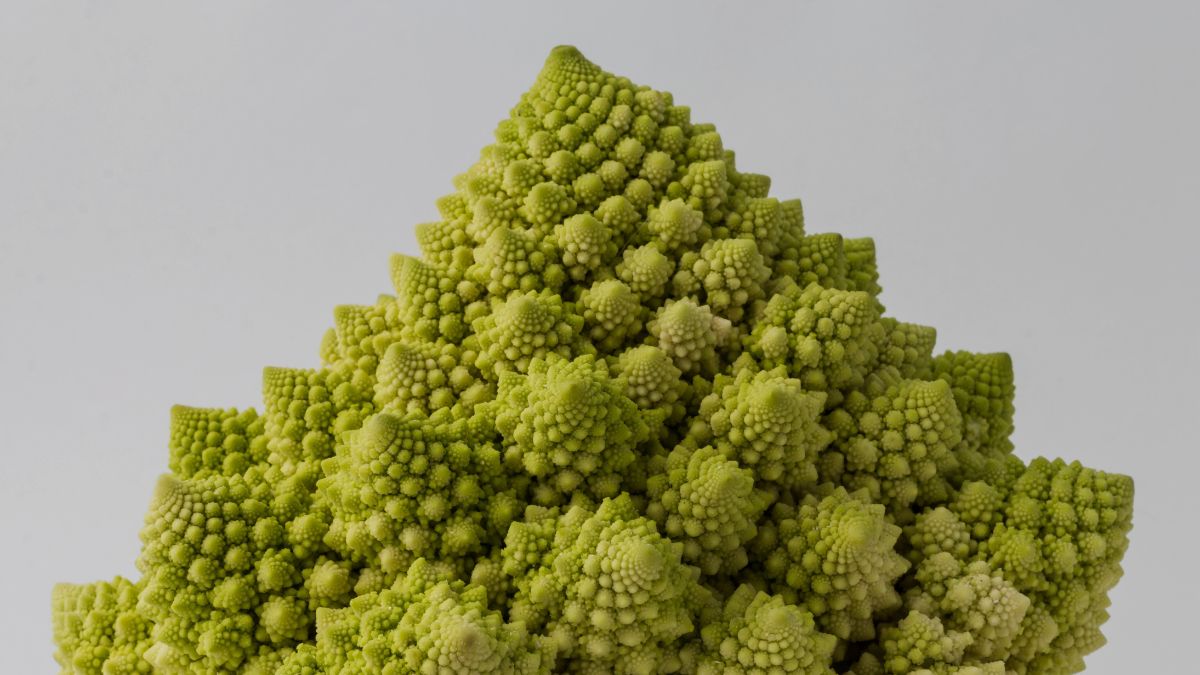
Geometry hadn't disappeared from nature. Science had just stopped looking for it. And once you see it, you can't unsee it.
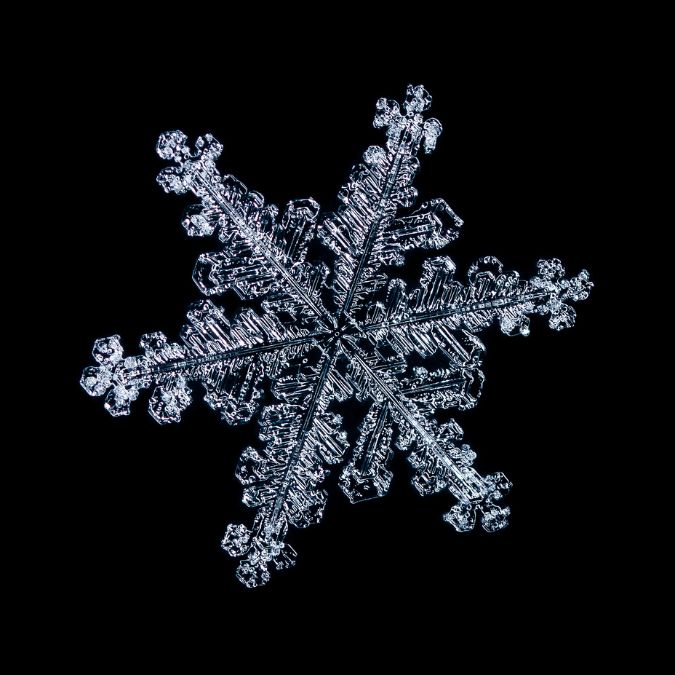
Snowflakes are always six-sided — because the water molecules that form them bond at angles of 109.5°, the angle of a tetrahedron. Atomic geometry becomes visible to the naked eye.
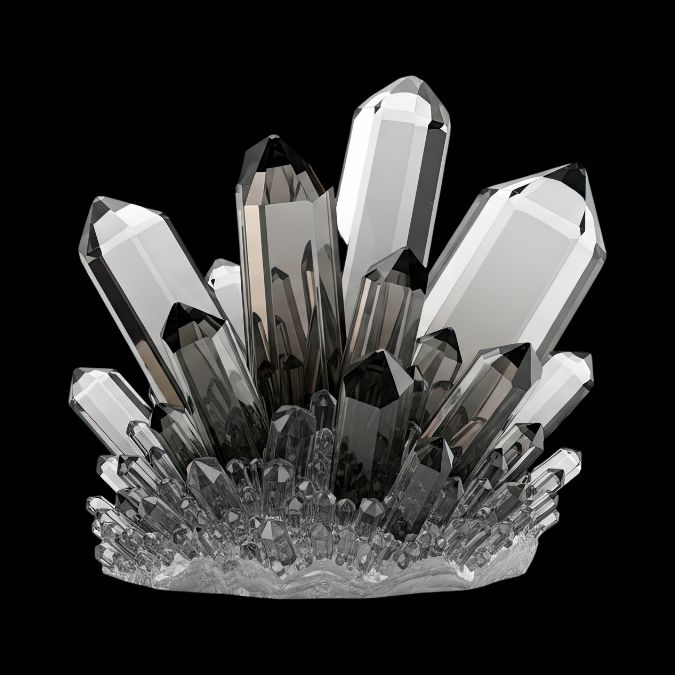
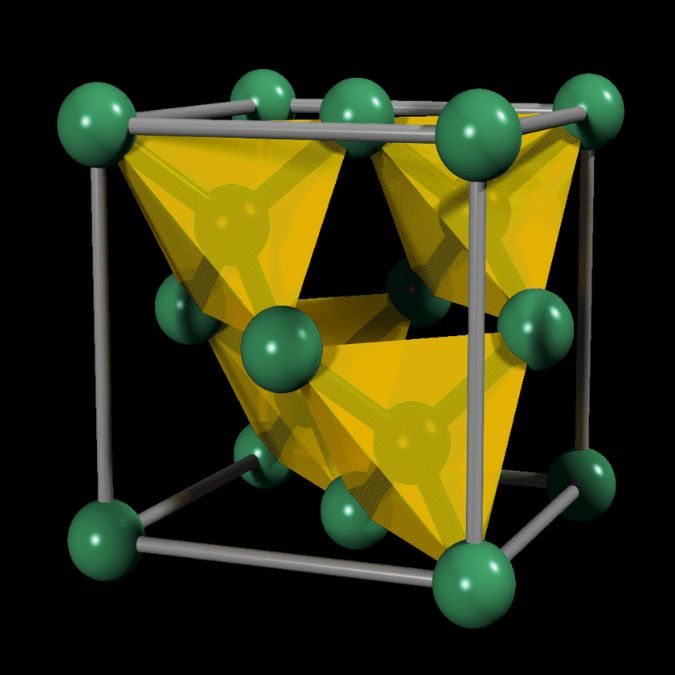
Salt forms cubes. Diamonds lock carbon atoms into tetrahedra nested inside a cube. Quartz forms hexagonal prisms. The geometry of the atom declares itself in every crystal.
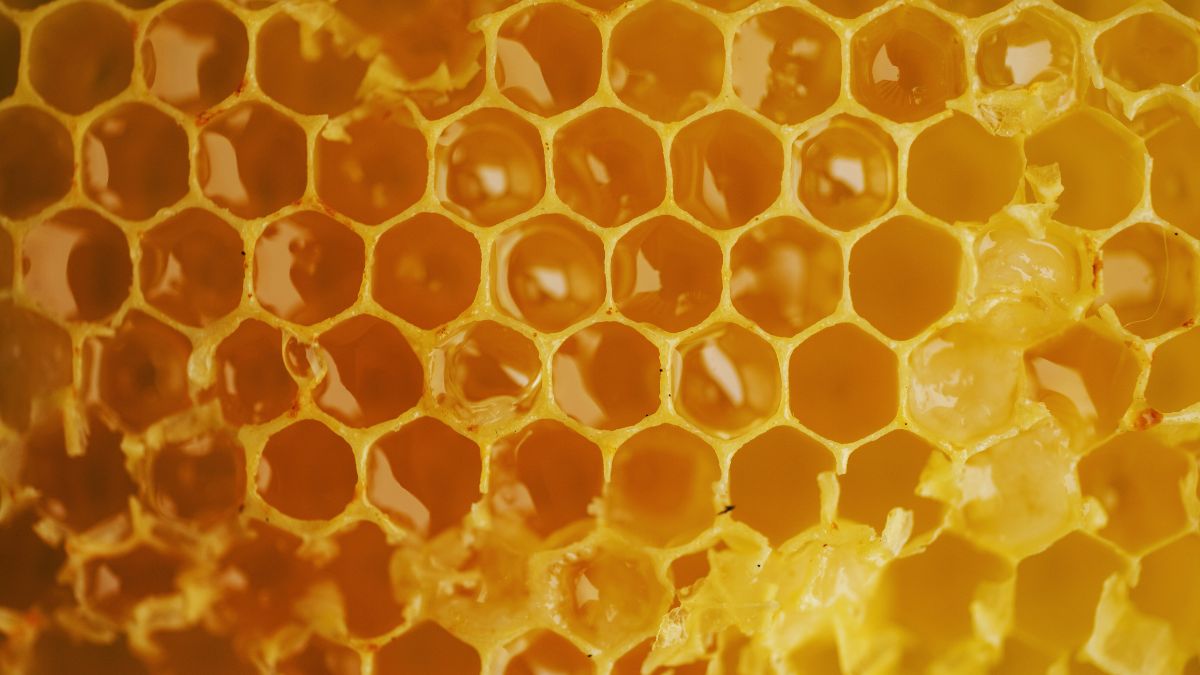
Honeybees build hexagonal cells — the most efficient way to tile a surface with equal areas using minimum material.
DNA spirals in a double helix. Proteins fold into precise geometric shapes that determine their function. Galaxies spiral in proportions related to the Golden Ratio. Galactic superclusters arrange themselves in vast geometric lattices — what cosmologists call the "cosmic web."
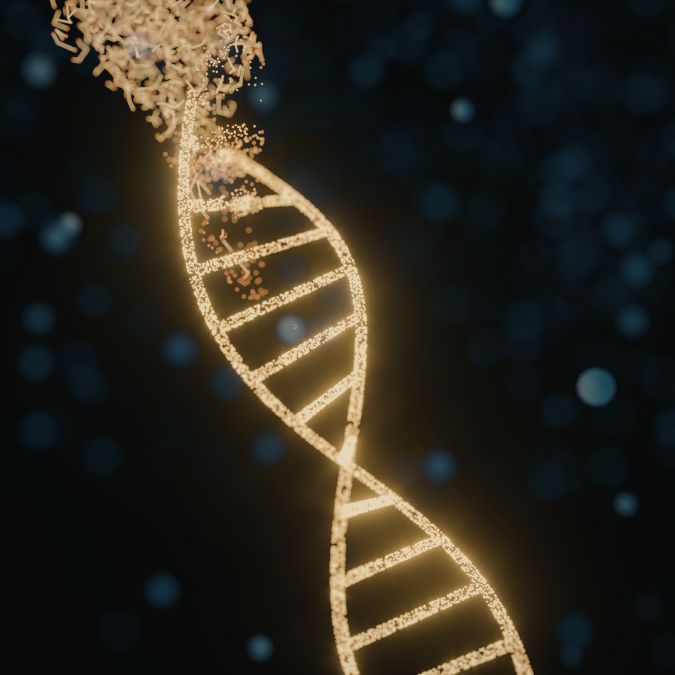

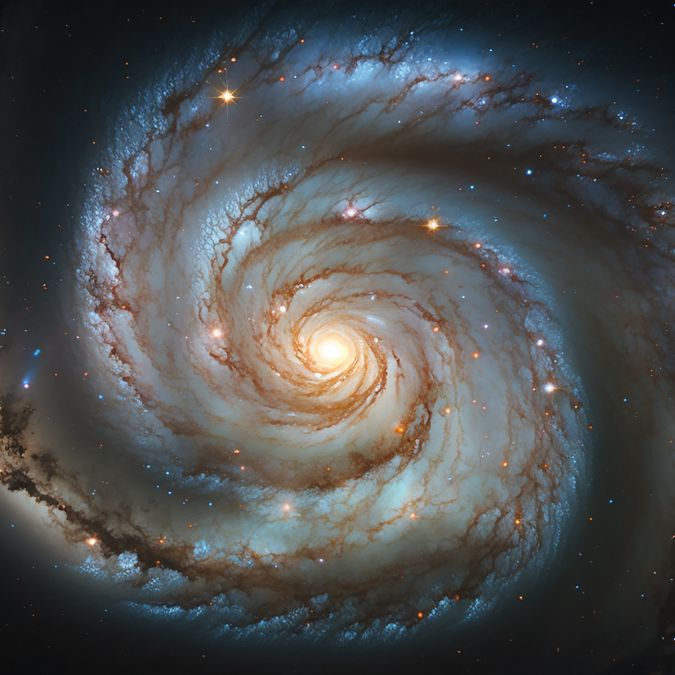
The same patterns — the same ratios, the same symmetries — appear at every scale of reality. From the molecular to the cosmic. Fractal, repeating, geometric. This is what physicists call scale invariance. And it points to something deeper.
The Atom Is Geometric
This is where our work begins. Look inside the atom and the geometric pattern becomes undeniable.
The electron cloud around every atom is organised into shells called orbitals. These come in four types — S, P, D, and F — and each has a distinct geometric form:
- S-orbitals are spheres
- P-orbitals arrange into octahedra — one of the five Platonic Solids
- D-orbitals create cubic symmetries — another Platonic Solid
- F-orbitals form cuboctahedra — an Archimedean solid extending the Platonic framework
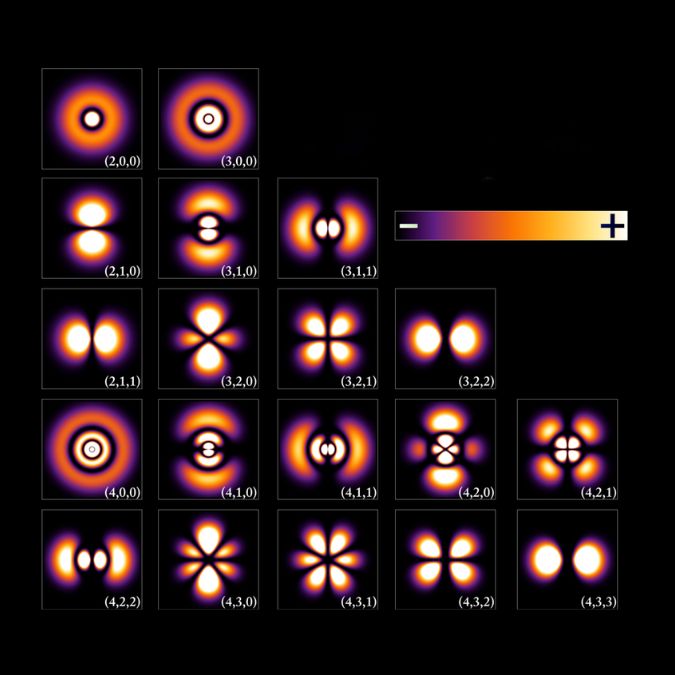
The shapes Plato described 2,400 years ago are the shapes that structure every atom in the universe. This isn't metaphor. The octahedron of the P-orbitals. The cube of the D-orbitals. These are the same solids, appearing at the most fundamental level of matter.
When you map the measured radii of all 81 stable elements against geometric ratios derived from nested Platonic Solids, a pattern emerges — one that the standard Bohr model, with its arbitrary constants, struggles to match.
The geometry was there all along. Inside every atom. In every crystal, every molecule, every living cell.
What We've Found
Over the past decade, we've been doing something simple in principle but radical in practice: returning to Euclidean geometry, extending it into higher dimensions, and applying it consistently — to atoms, to mathematics, to the structure of space itself.
The results speak for themselves.
Atomic structure. A geometric model based on nested Platonic Solids predicts the radii of all stable elements — without the arbitrary constants that the standard model requires. The geometry of the electron cloud matches the geometry of the solids, and the periodic table reveals its underlying architecture.
Wave-particle duality. Modelling space as a four-dimensional geometric medium — a modern, mathematical 4D Aether — provides a physical mechanism for quantised energy. Light isn't a paradox. It's geometry operating in a dimension we experience as time.
Fundamental constants. The speed of light, Planck's constant, the gravitational constant — not as arbitrary numbers requiring units, but as pure geometric ratios. We call this Dimensionless Science: physics without the arbitrary, derived from geometry alone.
Gravity and galaxies. A geometric unification of gravity and electromagnetism explains the distribution and rotation of galaxies — without invoking dark matter.
The foundations of mathematics. A geometric concept of infinity — what we call Aleph 0.5, sitting between Cantor's countable and uncountable infinities — offers resolutions to the Continuum Hypothesis and the Russell Paradox. The incompleteness isn't in mathematics. It's in the non-geometric framework we've been using.
These aren't separate theories. They are a single geometric framework applied at different scales, producing consistent results at every level. Where the current scientific paradigm requires incompatible models for different domains, geometry provides one coherent picture.
The universe is 99% space. That space has structure. And that structure is geometric.
And if the same geometric patterns structure atoms, molecules, living systems, and galaxies — the question becomes unavoidable: why? Why does the universe organise itself this way? This is the question that sacred geometry has asked for millennia — not as mysticism, but as an inquiry into the meaning behind the mathematics. When geometry is the structure of reality at every scale, understanding that structure isn't just physics. It's understanding the nature of existence itself.