Introduction
In the 19th century, physicists believed that light — like all other waves — required a medium to travel through. They called this medium the Luminiferous Aether. Despite extensive searches, no evidence for it could be found, and when Einstein's particle model of light gained acceptance, the idea was largely set aside.
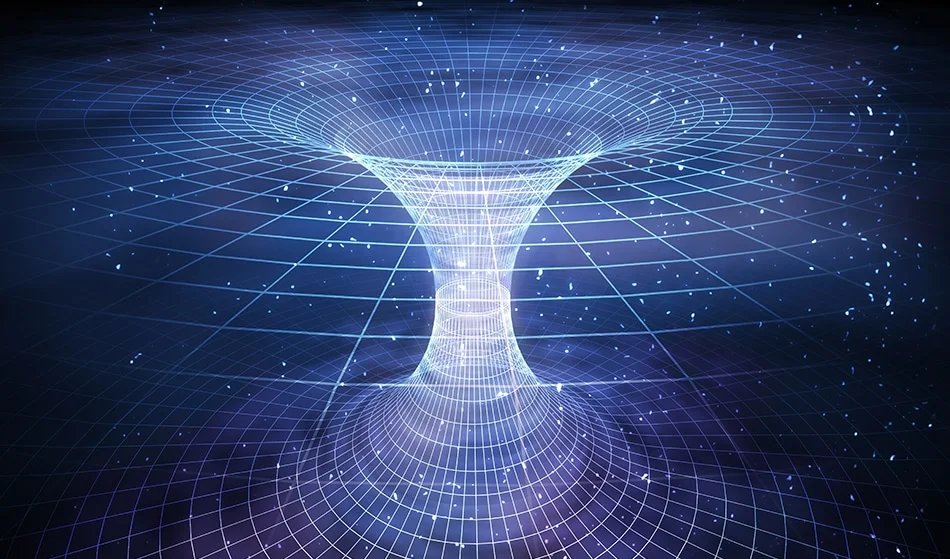
4D Aether Theory revisits that question with a new answer: the aether was never found because it exists in a dimension we cannot directly measure. It is not a fluid in 3D space — it is a fourth-dimensional geometric structure. Once this shift is made, a coherent, geometry-based explanation for light, quantisation, time, and gravity begins to emerge — one that requires no probabilistic interpretation and no subjective observer.
Key Takeaways
- The vacuum of space is not empty — it is a 4D geometric medium based on the Hypercube (tesseract).
- Light is always a wave; its apparent quantisation arises from the rotational geometry of 4D space.
- Wave-particle duality, the Ultraviolet Catastrophe, and the photoelectric effect are all resolved geometrically — without requiring a photon particle.
- The constant [speed of light](/why-is-the-speed-of-light-constant/) follows from the electromagnetic impedance of the 4D vacuum.
- Time is rendered in discrete frames by the rotation of 4D space — not a continuous flow.
- Quantum gravity finds a natural foundation in geometric quantisation extended to all scales.
The Problem with Wave-Particle Duality
When 19th-century physics established that light behaves as a wave — with measurable frequency, wavelength, and interference — one question remained unanswered: what medium carries the wave through the vacuum of space? Every other known wave requires a medium. Sound travels through air. Water waves travel through water. But light travels through the void between stars.
The failure to find an aether led science to an uncomfortable compromise: light was simultaneously a wave and a particle, depending on how it was observed. The mechanism by which a wave becomes a particle was explained by invoking the role of the conscious observer — introducing subjective agency into physical law at its most fundamental level.
4D Aether Theory proposes that this compromise was unnecessary. The medium was always there. It was simply being looked for in the wrong dimension. For a detailed look at the wave-particle problem see Is There an Alternative to Wave-Particle Duality?
What Is 4D Space?
To understand the 4D Aether, it helps to first understand what a fourth spatial dimension means geometrically.
A 3D solid — a cube, for instance — can be fully observed and measured from the outside. Its faces, edges, and vertices are all simultaneously accessible. A 4D solid is different in kind: it incorporates time into its very structure. It is an object whose complete form cannot be seen at any single moment — only traced as it rotates through 3D space over time. What we observe at any instant is a 3D cross-section of a larger 4D object, just as a 2D shadow is a cross-section of a 3D form.
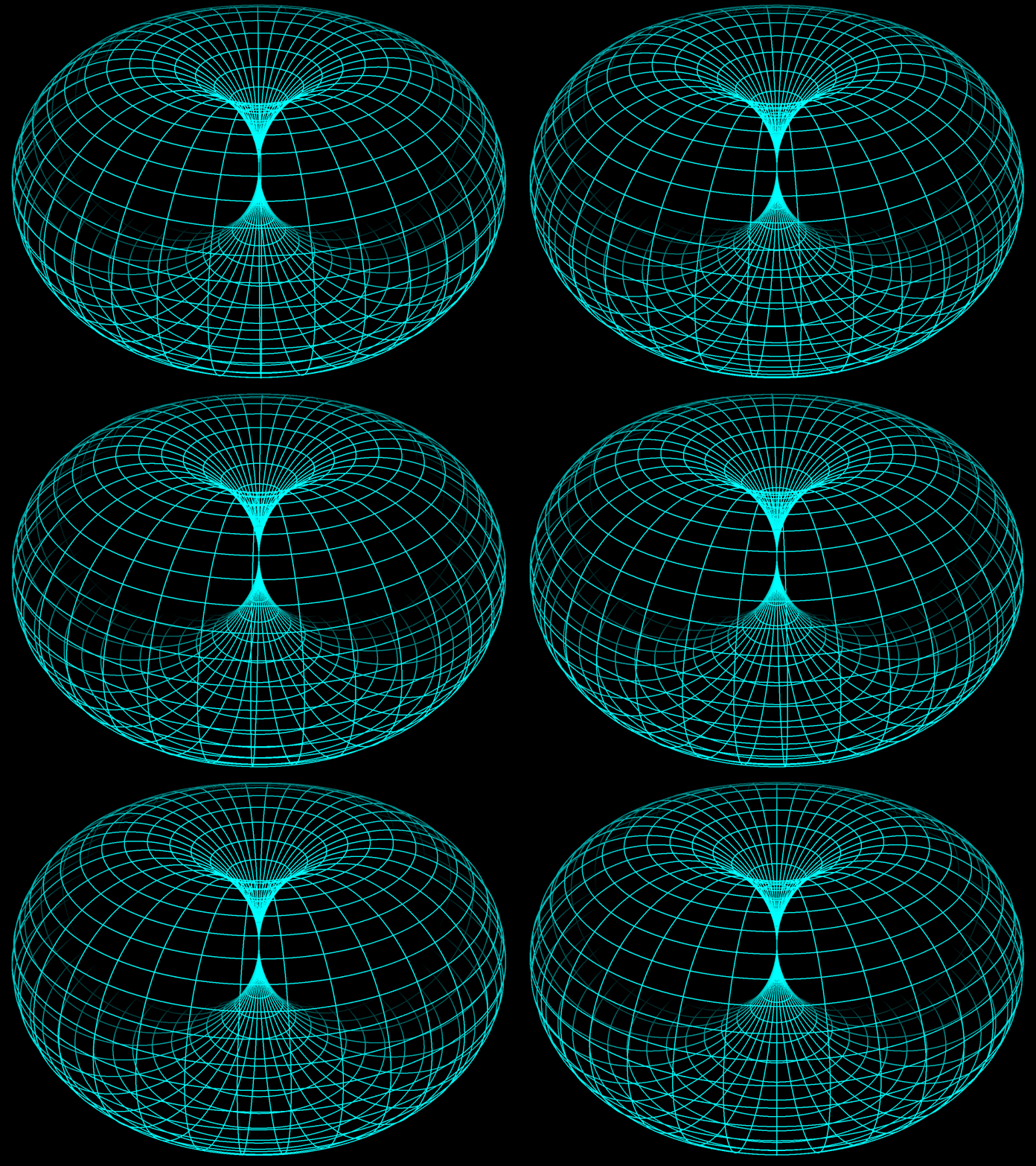
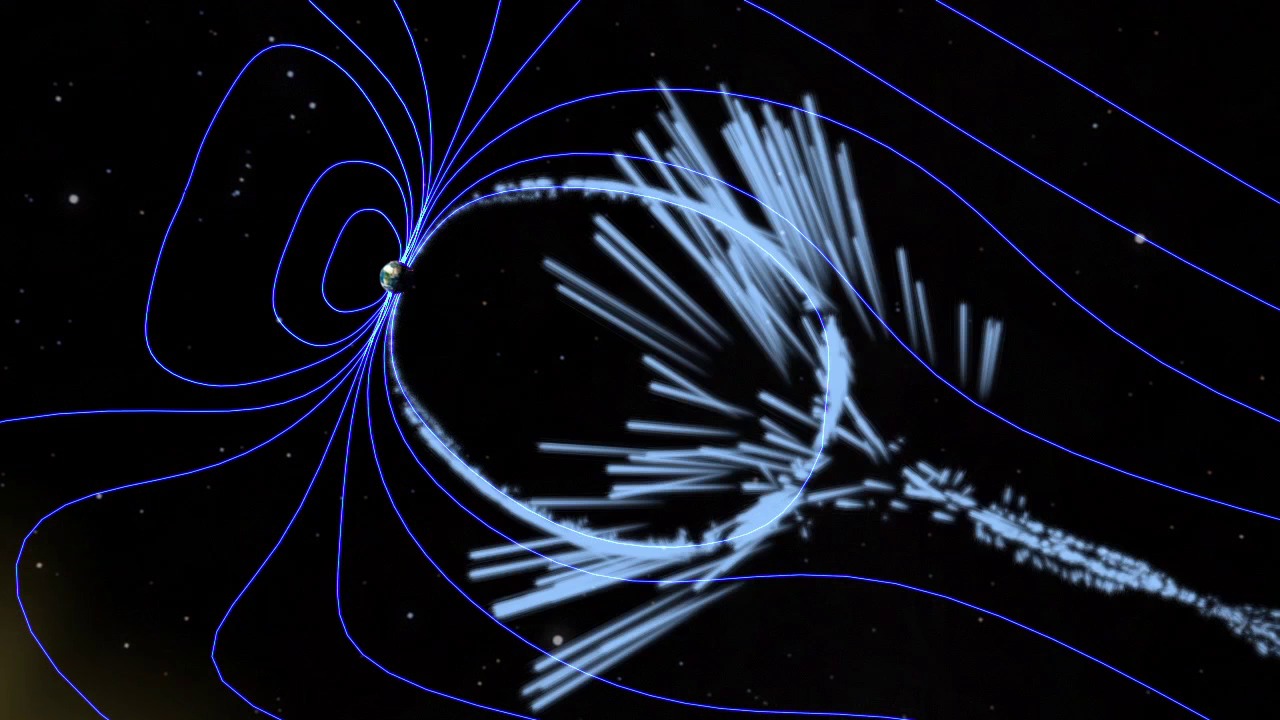
The simplest 4D object is the torus — sometimes called the 4D sphere. A torus is a donut-shaped surface generated by rotating a circle through a fourth dimension. This is not an abstract construction: torus-shaped magnetic fields appear throughout the universe — around the Earth, the Sun, and every bar magnet. Their north-south polarity is a direct geometric consequence of toroidal structure. The torus is 4D geometry made observable.
Space-Filling Geometry and the Hypercube
If the aether must fill the entire universe uniformly — with no gaps, in all directions equally — then its geometry must be space-filling. Among all regular polyhedra, only the Cube has this property. A cubic lattice can tile all of 3D space perfectly, replicating itself at any scale without leaving voids.
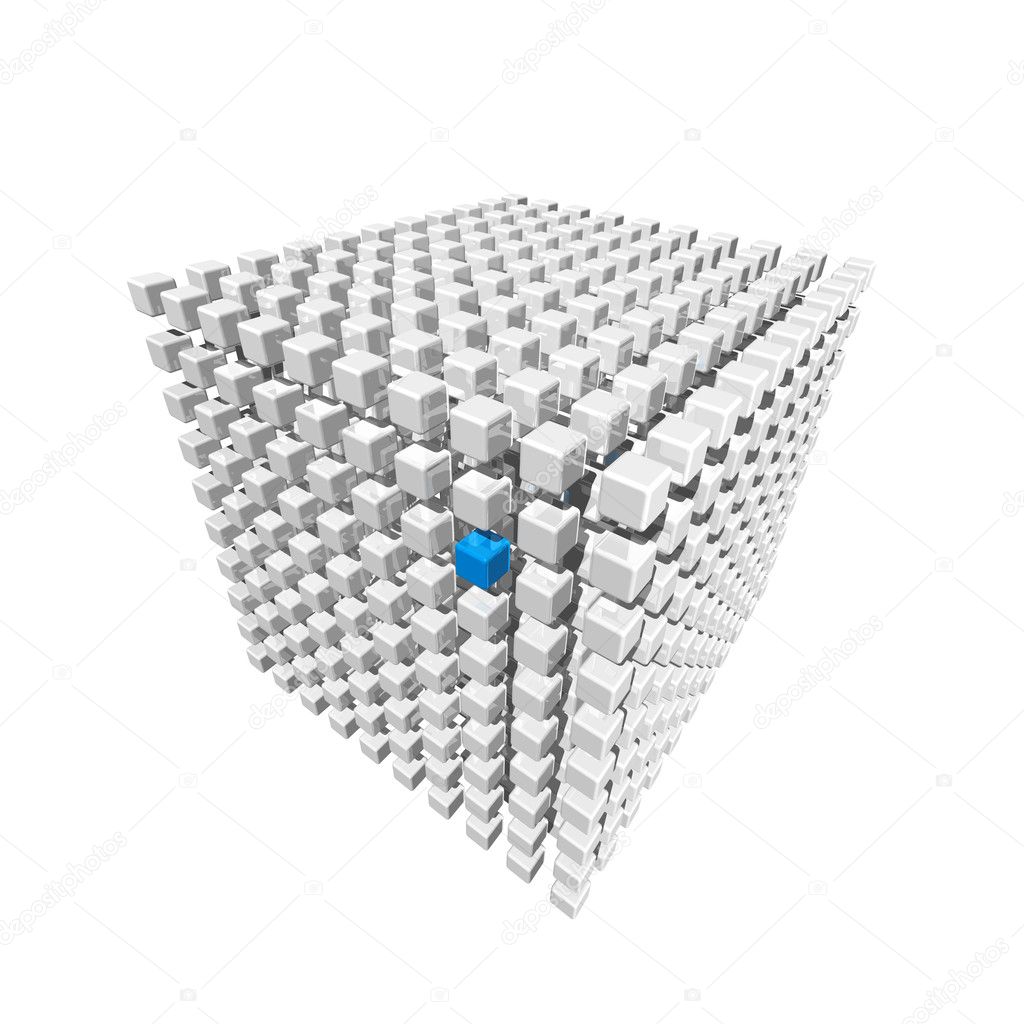
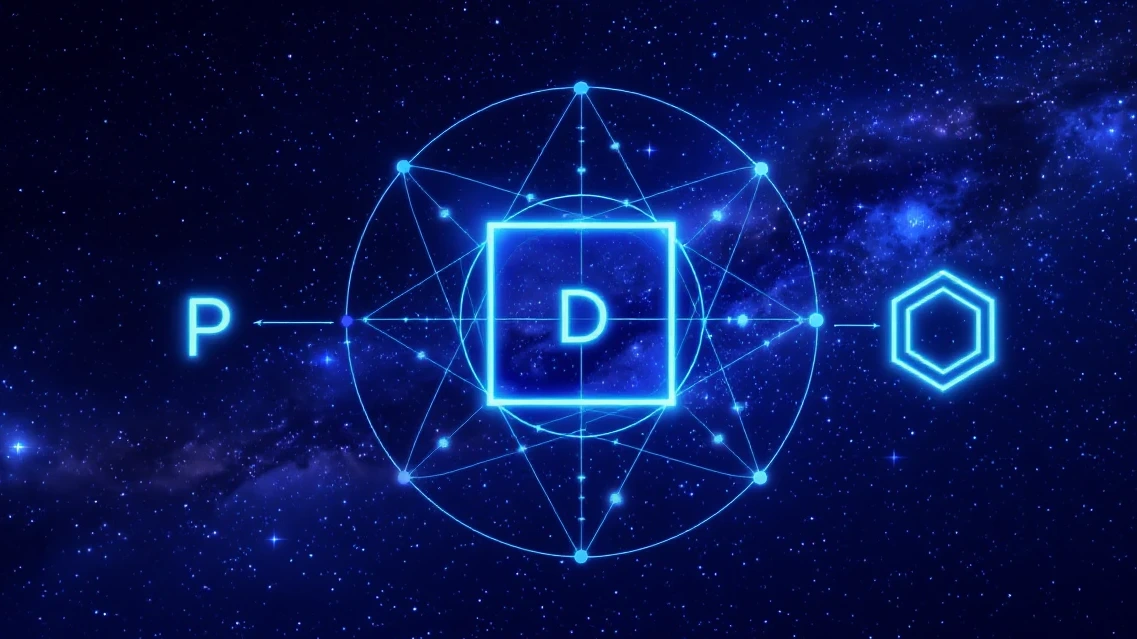
The space of the universe is isotropic — consistent with cubic geometry. But light waves are sinusoidal and spherical. How does a cubic medium transmit a spherical wave? The answer lies in the 4D extension of the cube: the Hypercube (tesseract). The Hypercube is to the Cube what the Cube is to the square — the next-dimensional analogue. It can be visualised as two cubes constantly exchanging places as the structure rotates through 4D space. As time passes, each cube takes its turn occupying the central position. Each such alignment corresponds to one rendered moment of time.

This rotation mechanism is the core of the theory. Time is not a continuous flow — it is rendered in discrete frames by the rotation of 4D space. The quantised packets in which light appears are not particles; they are the discrete rotational steps of the Hypercubic medium.
Electromagnetism and 4D Geometry
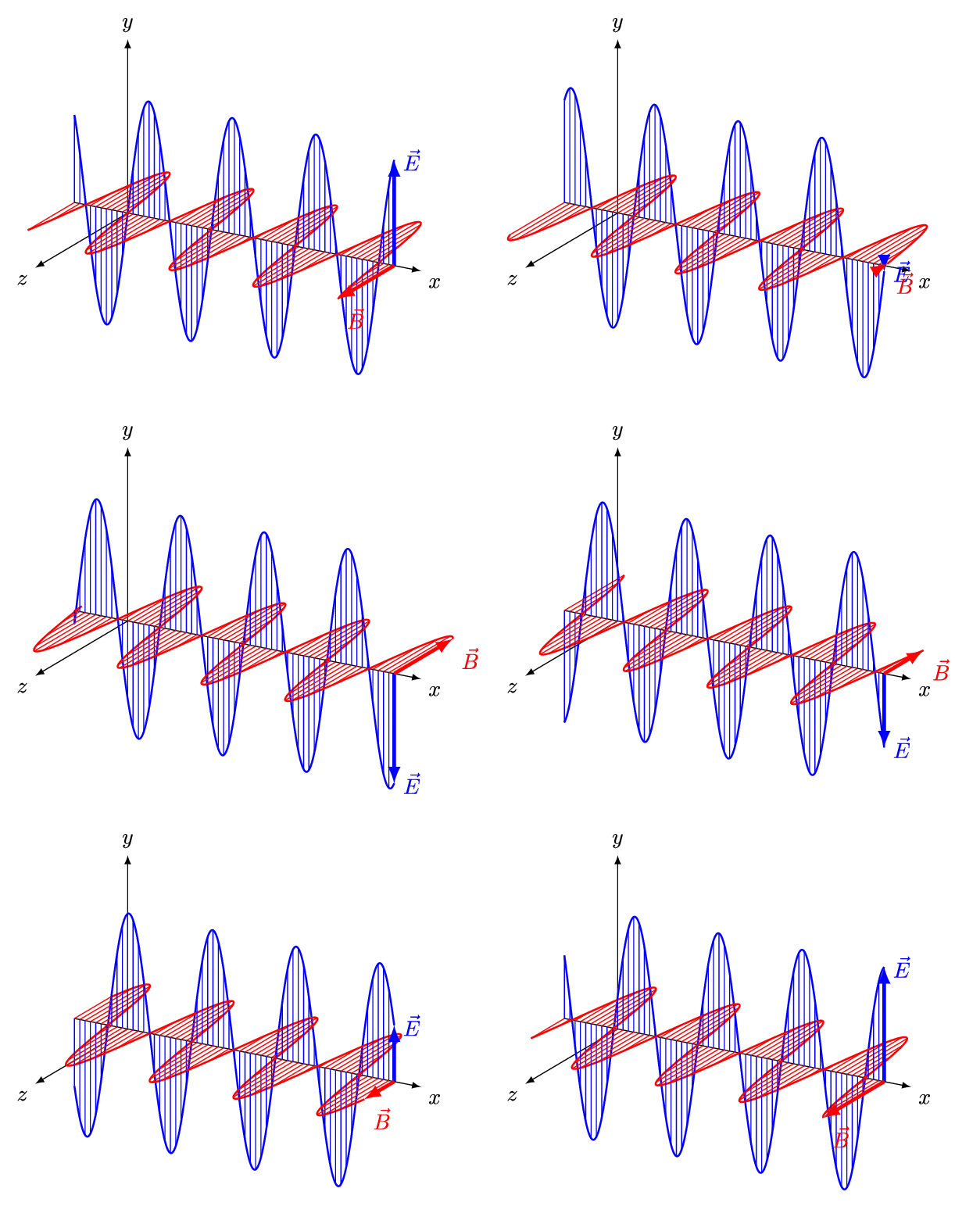
The geometric nature of the 4D Aether provides a direct explanation for the structure of electromagnetic waves. Electricity and magnetism are manifestations of the same underlying phenomenon, consistently offset at exactly 90° to each other. This is not an arbitrary physical fact — it is a geometric consequence of 4D rotation.
As each cycle of an electromagnetic wave completes, the 4D Hypercube rotates. The electric field (E) moves at 90° to the magnetic field (B) as the wave propagates — exactly as adjacent faces of a rotating hypercube are oriented to each other. The wave's structure is the geometry of its medium.
The Geometric Scaling of EM Waves
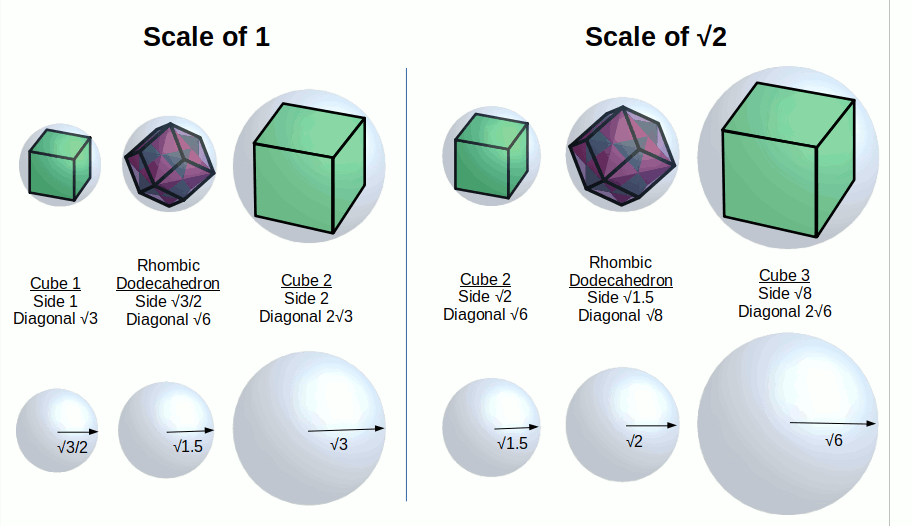
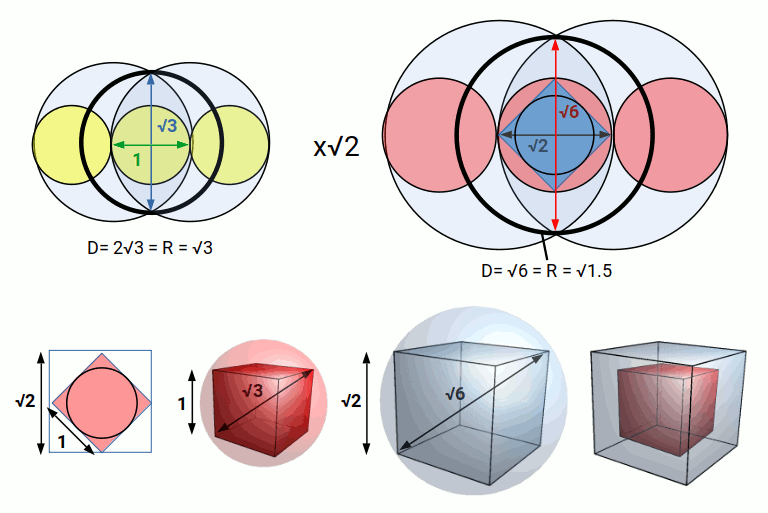
Examining the wavelengths of the Cosmic Microwave Background, the threshold frequencies of the photoelectric effect, and the work functions of various materials reveals a consistent pattern: electromagnetic waves are scaled by √2 and √3 ratios. These are precisely the ratios encoded in the geometry of the Cube — the edge, face diagonal, and space diagonal stand in the ratio 1 : √2 : √3.
This is not coincidence. It is the signature of a cubic geometric medium. The musical octave and the musical fifth — the two most fundamental harmonic intervals — follow the same ratios, linking the quantisation of light to the mathematics of harmonic resonance.
Evidence for the 4D Aether
Three independent observational phenomena support the existence of a geometric medium in the vacuum of space.
The Constant Speed of Light
The speed of light is not an arbitrary universal constant — it is derived from the electromagnetic impedance of the vacuum. Empty space has measurable magnetic permeability (μ₀) and electric permittivity (ε₀), and their product determines exactly how fast electromagnetic waves propagate: c = 1/√(μ₀ε₀). This impedance is a property of the vacuum itself. The 4D Aether provides the geometric substrate from which it arises — the resistance of a 4D medium to wave propagation, not the speed of an unsupported particle.
The Cosmic Microwave Background
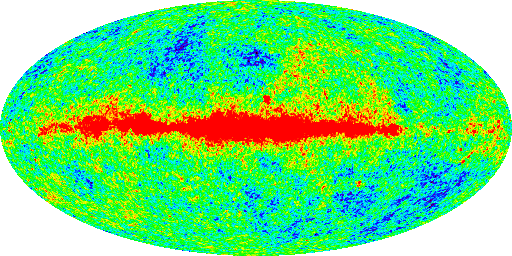
The Cosmic Microwave Background (CMB), discovered in 1964, is a remarkably uniform field of microwave radiation permeating the entire observable universe. Mainstream cosmology interprets it as a remnant of the Big Bang — but the uniformity is difficult to explain under that model without additional assumptions such as cosmic inflation. The 4D Aether offers a simpler interpretation: the CMB is the intrinsic energy signature of the geometric vacuum — the background emission of a universe filled with rotating 4D space.
For more see What is the Cosmic Microwave Background? and Did the Big Bang Happen?
The Quantised Red Shift
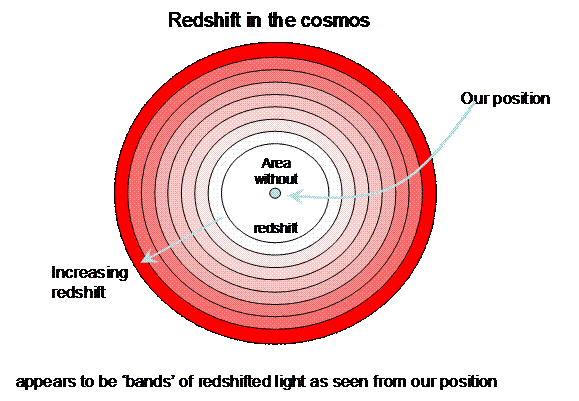
When the red shifts of distant galaxies are measured, they appear not as a smooth continuum but in discrete bands — as if galaxies can only recede at specific quantised velocities. This mirrors the quantised energy levels found at the atomic scale. The 4D Aether unifies these macro and micro quantisation phenomena through the same geometric principle: the discrete rotational steps of 4D space produce quantised phenomena at every scale, from electron orbitals to galactic recession.
What 4D Aether Theory Resolves
The Ultraviolet Catastrophe
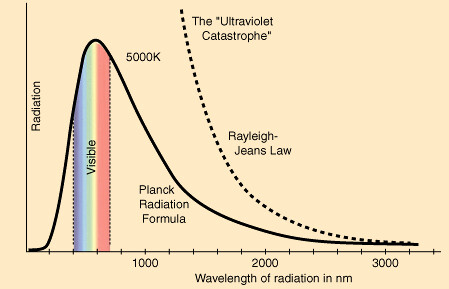
Classical physics predicted that a black body should radiate infinite energy at ultraviolet frequencies — the Ultraviolet Catastrophe. Planck resolved this empirically by proposing that energy exists only in discrete packets, without explaining why. The 4D Aether provides the geometric reason: EM waves are constrained to the rotational steps of 4D space, which forces them into discrete energy levels. Quantisation is not an imposed rule — it is a geometric consequence. For the full treatment see The Ultraviolet Catastrophe — A Harmonic Solution.
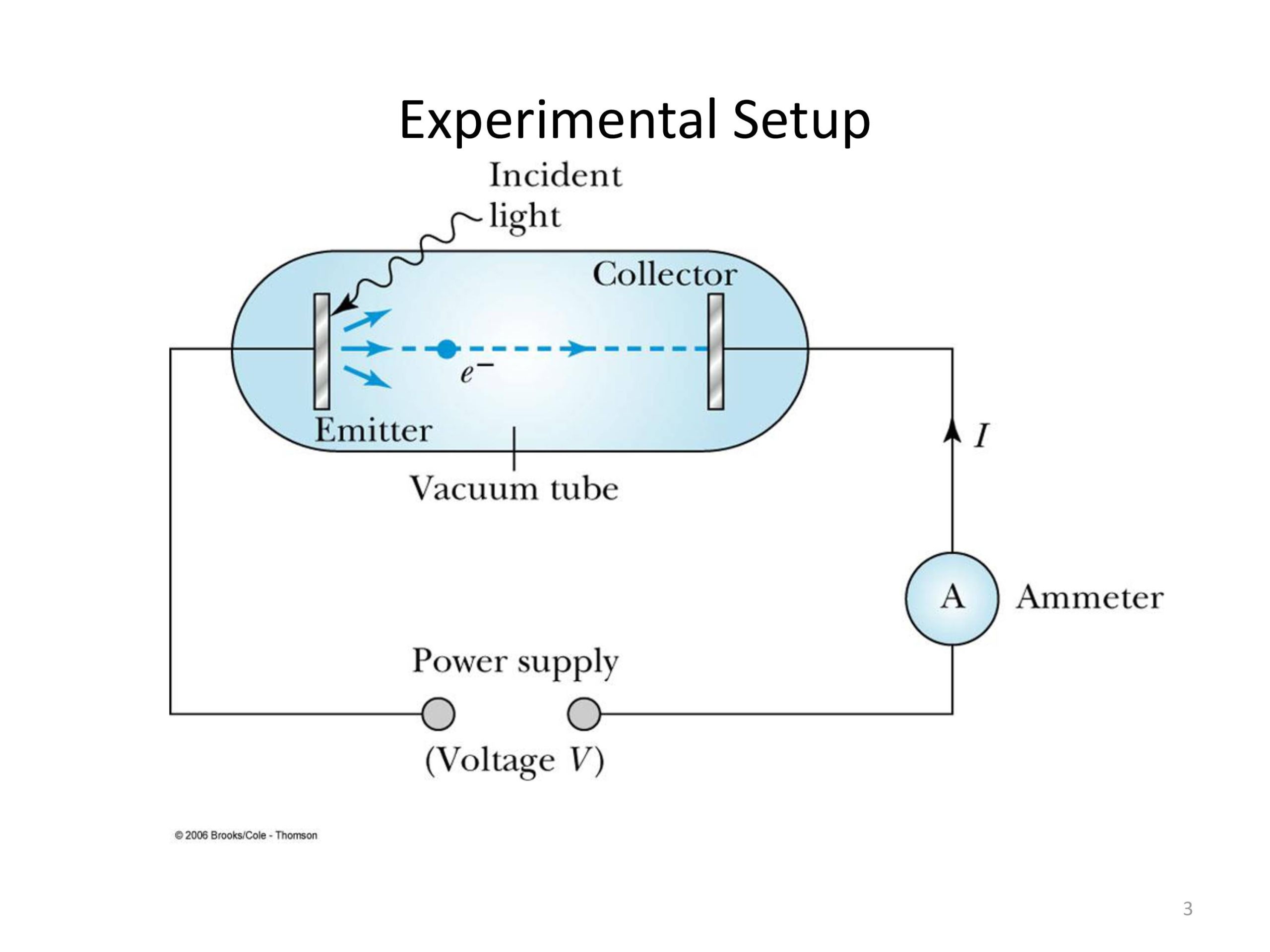
The Photoelectric Effect
The ejection of electrons from a material when illuminated above a threshold frequency was Einstein's primary evidence for the photon. The 4D Aether offers a geometric alternative: it is not the energy of a particle that causes ejection, but the geometric size of the wave. When the wavelength crosses a threshold determined by the structure of the material's electron orbitals, ejection occurs. Frequency and work function, when multiplied and squared, yield the speed of light divided by two — a geometric relationship, not an energy one. See Can the Photoelectric Effect Be Explained Without the Need for a Photon?
Wave-Particle Duality and Quantum Foam
Once the 4D Aether is established as the medium for light propagation, wave-particle duality dissolves. Light is always a wave. Its quantised behaviour arises from the geometry of the medium, not a collapse into a particle. The observer effect — invoked to explain the collapse — is no longer needed.
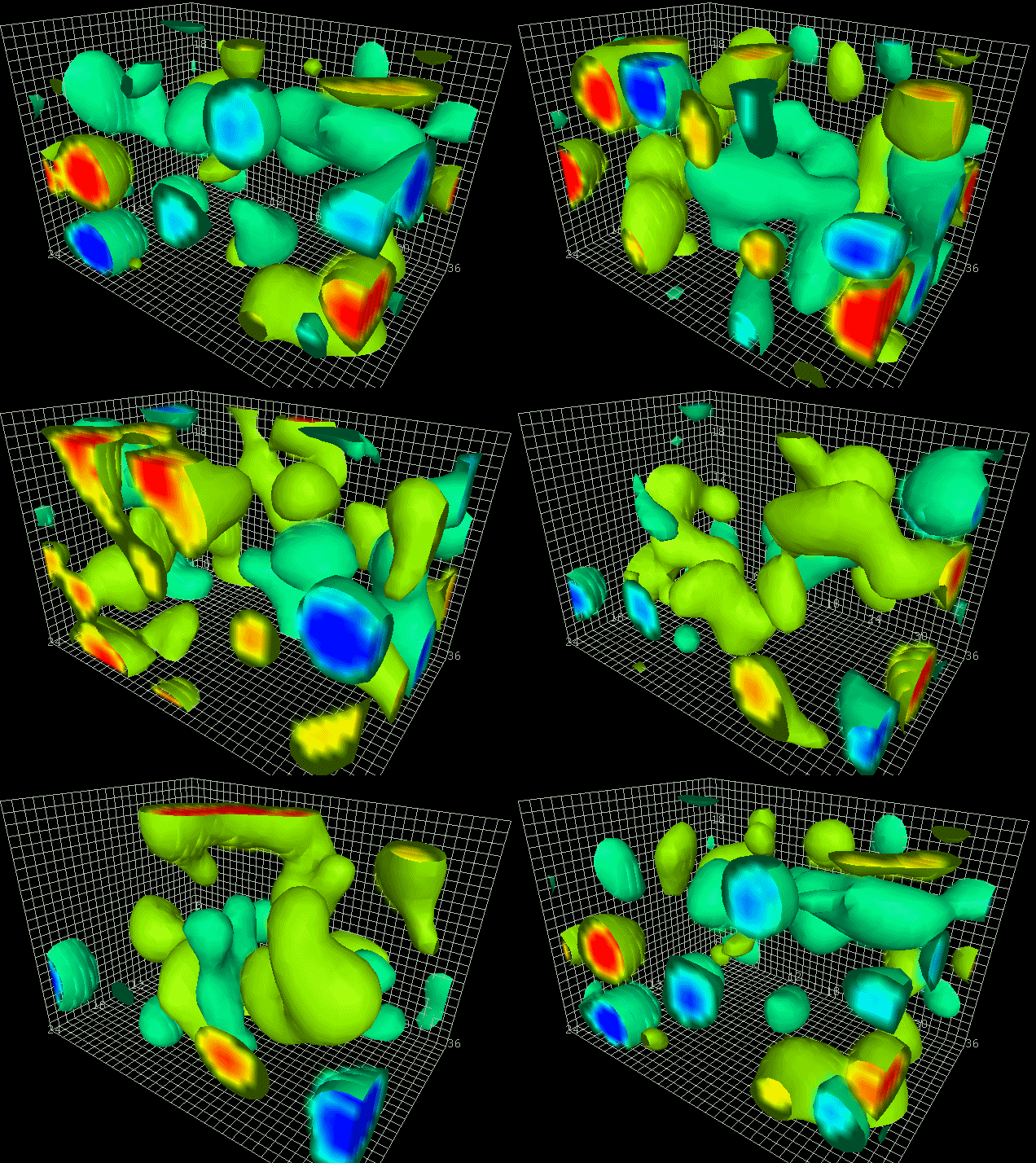
At the Planck scale, the theory of Quantum Foam proposes that space-time bubbles and fluctuates at the smallest observable scales. In the 4D Aether framework, Quantum Foam and the Aether are the same thing — the Planck-scale activity is the rotation of the Hypercubic medium completing discrete frames of time. What appears as random foam from a 3D perspective is the ordered geometry of 4D space. The CMB, virtual particles, quantum fluctuations in the vacuum, and the Luminiferous Aether are all expressions of this single geometric medium.
Relativity, Time, and Quantum Gravity
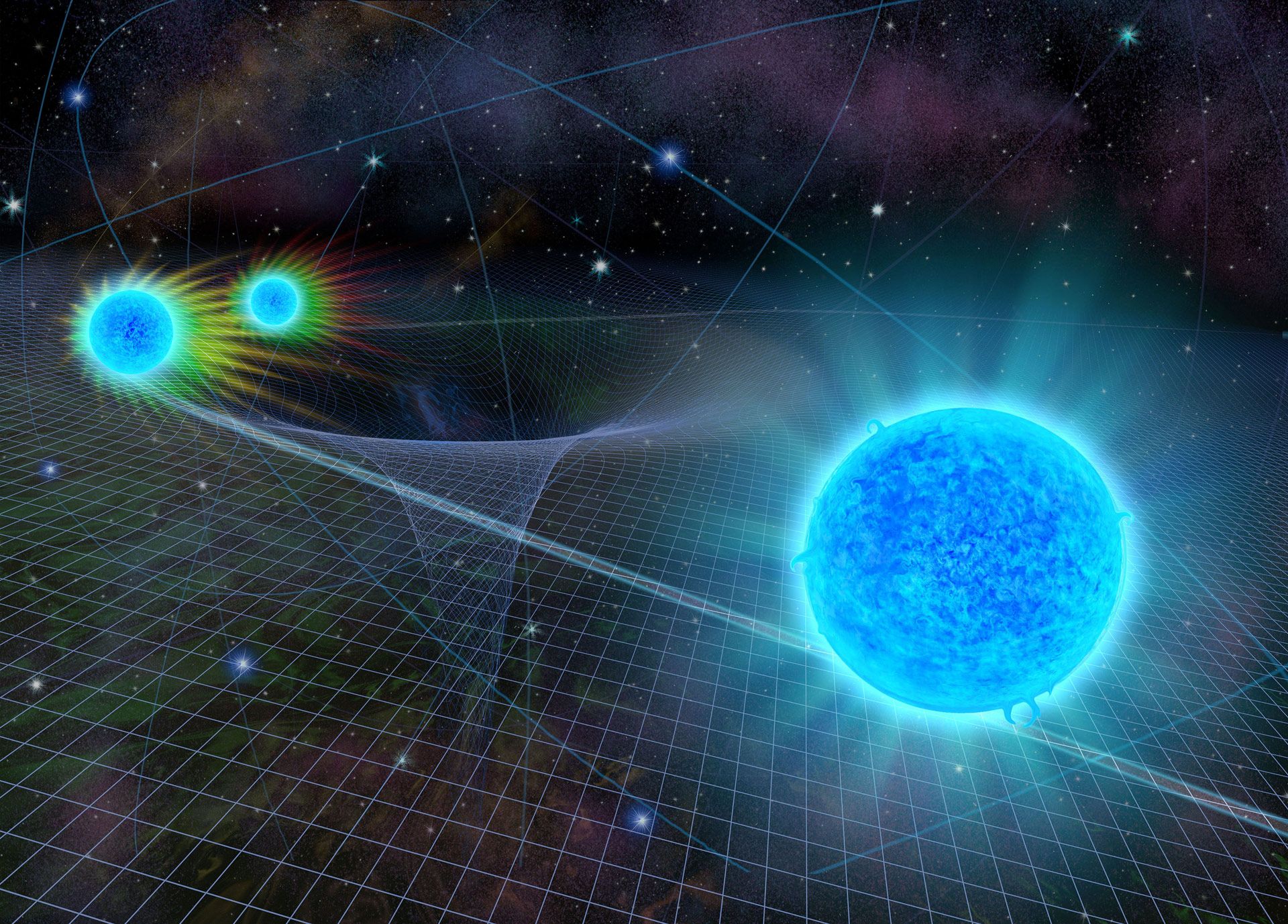
Much of relativity rests on the concept of a photon moving through 3D space at a fixed speed. The 4D Aether replaces this with a different model: time is rendered in discrete frames by the rotation of the Hypercube through 3D space. This provides a different geometric foundation without contradicting the observational predictions of relativity — opening the field of Geo-Relativity.
The problem of quantum gravity — the century-old conflict between the continuous geometry of relativity and the discrete steps of quantum mechanics — also finds a natural resolution. In the 4D Aether, geometric quantisation applies at all scales simultaneously. The same rotational structure that quantises light at the atomic scale governs gravitational phenomena at the cosmic scale. Discrete and continuous are not in conflict; they are the same geometry viewed at different resolutions.
Conclusion
The aether was never disproved — it was simply never found in three dimensions. The 4D Aether relocates it to the dimension where geometry, not substance, provides the medium. From that single move, a chain of resolutions follows: quantisation without photons, wave propagation without duality, time without continuity, and gravity without a separate quantum theory.
The implications extend across the full framework of our work. For the next steps, see Atomic Geometry, Geo-Quantum Mechanics, Geo-Relativity, and Solar Geometry.
FAQ
What is the 4D Aether?
The 4D Aether is a proposed geometric medium that fills the vacuum of space. Unlike the 19th-century luminiferous aether, it is not a physical fluid — it is a fourth-dimensional structure based on the Hypercube (tesseract). Because it exists in 4D, it is undetectable by 3D instruments, which explains why the original aether searches found nothing.
How does the 4D Aether transmit light?
Electromagnetic waves propagate through the 4D Aether as the tesseract rotates through 3D space. Each full rotation renders one 'frame' of time and produces one cycle of an EM wave. The quantised nature of this rotation explains why light appears in discrete energy packets — without requiring a photon particle.
Does this theory replace Einstein's relativity?
Not directly — it proposes a different geometric foundation for time and space. Where relativity treats time as a dimension woven into a 4D spacetime fabric, 4D Aether Theory treats time as the rotation of a 4D geometric object through 3D space. This opens a new field called Geo-Relativity, explored on the Geo-Relativity theory page.
What evidence supports the 4D Aether?
Three independent phenomena point toward a geometric aether: the constant speed of light (derived from the impedance of the vacuum), the Cosmic Microwave Background (a uniform energy field throughout the universe), and the quantised red shift of distant galaxies. The 4D Aether provides a single geometric explanation for all three.
How does 4D Aether relate to quantum foam?
In the 4D Aether framework, Quantum Foam and the Aether are the same thing. The Planck-scale activity that appears as random foam is the rotation of the Hypercubic medium completing discrete frames of time. The CMB, virtual particles, vacuum fluctuations, and the Luminiferous Aether are all the same geometric medium — just observed at different scales and through different theoretical lenses.
What problems does 4D Aether Theory solve?
It resolves wave-particle duality (light is always a wave — the aether transmits it), the Ultraviolet Catastrophe (quantisation arises from 4D geometry, not photon particles), the photoelectric effect (a geometric threshold, not an energy threshold), and provides a foundation for quantum gravity by extending geometric quantisation to all scales.