Two Ways of Seeing
Place a circle on a page. A conventional geometer will measure its radius, calculate its circumference, determine its area, describe how it relates to other curves. The description is precise, reproducible, and entirely correct. Now ask a practitioner of sacred geometry what they see — and the answer begins somewhere else entirely. They will speak of the Monad, the principle of wholeness, how this single form contains within itself the seed of every other geometric figure that can possibly exist. They will describe the dot at the centre as a point of infinite potential, the radius as the first extension of consciousness into space, the boundary of the circle as the limit of one world and the threshold of the next. They are looking at exactly the same shape. They are asking a different question.
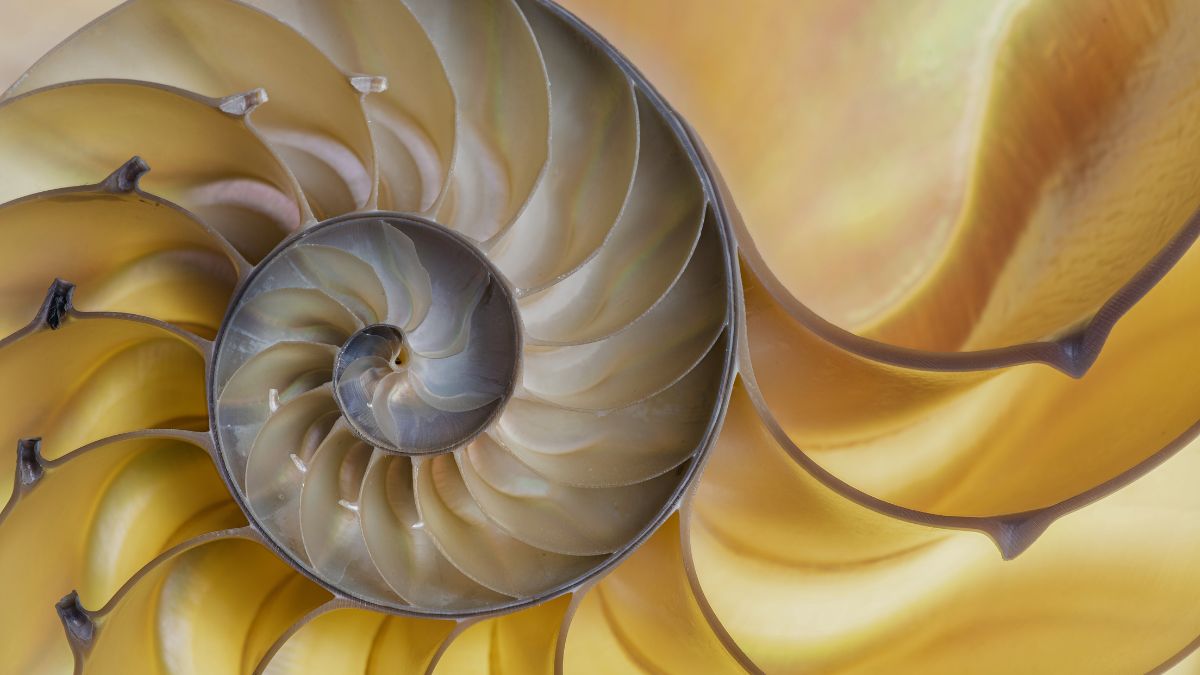
That distinction — the same forms, different inquiry — is the heart of what sacred geometry is. Conventional geometry, in its modern mathematical sense, is a descriptive and analytical discipline. It tells us what shapes are, how they relate to each other, and how to calculate their properties with exactitude. It is an instrument of enormous power, underlying architecture, engineering, physics, computer graphics, and pure mathematics at its deepest levels. Sacred geometry does not dispute any of this. It adds a layer of inquiry that conventional mathematics tends to set aside: not just what these forms are, but what they mean. Why do these particular proportions appear so consistently in nature? Why do certain ratios — the golden section, the square root of two, the relationship between the radius and circumference of a circle — recur at every scale of the universe, from the spiral of a nautilus to the orbital resonances of planets? Why do cultures separated by oceans and millennia converge on the same geometric symbols when they reach for the deepest truths they know?
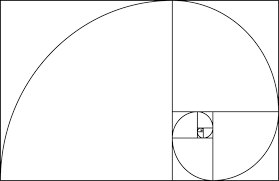
Sacred geometry is not a mystical overlay projected onto geometry from the outside. It is geometry itself, pursued with a different set of questions — questions about pattern, proportion, origin, and meaning. The word sacred does not denote religiosity in any narrow denominational sense. It means set apart, treated with reverence, regarded as pointing beyond the merely practical toward something universal and enduring. A geometer in the modern secular tradition and a temple architect in ancient Egypt are both doing geometry. The sacred geometer is the one who believes the forms themselves carry significance — that the universe is not accidentally shaped the way it is, but that its patterns express something deep and consistent about the nature of existence itself.
This is why sacred geometry has always attracted not just spiritual practitioners but mathematicians, architects, physicists, and artists. The tradition does not require you to hold any particular belief. It requires only that you take the patterns seriously — that you look at the recurrence of the golden ratio across biology, art, music, and architecture and ask why, rather than simply recording that it occurs. That question — why does the universe pattern itself this way? — is the animating question of sacred geometry, and it is one of the most powerful questions a human mind can ask.
Key takeaways
- Sacred geometry uses the same forms as conventional geometry — circle, triangle, square, spiral — but asks what they mean and why they recur throughout nature at every scale.
- The tradition is practised without measurement, using only a compass and straightedge. All proportions (φ, √2, √3) emerge from the geometry itself, mirroring how nature constructs forms through intrinsic constraints.
- Sacred geometry is not a belief system — it is a practice of careful observation, open to scientific, philosophical, aesthetic, and spiritual inquiry alike.
Art, Science, and Meaning
For most of human history, the separation between science, art, and spiritual inquiry that we take for granted today did not exist. The Pythagoreans of ancient Greece were mathematicians, philosophers, and members of a spiritual brotherhood simultaneously, and they experienced no contradiction in this. Number, for them, was not merely a computational tool — it was the substance of reality. The declaration that all is number was not a metaphor but a philosophical position about the nature of the cosmos. Geometry was the visible expression of number in space: the triangle was not just three lines but the Triad, the principle of dynamic stability and generation. The square was the Tetrad, solidity and earth. The pentagon carried the Pentad, life and the principle of growth through self-similarity. Form and meaning were, in the Pythagorean framework, the same thing seen from different angles.
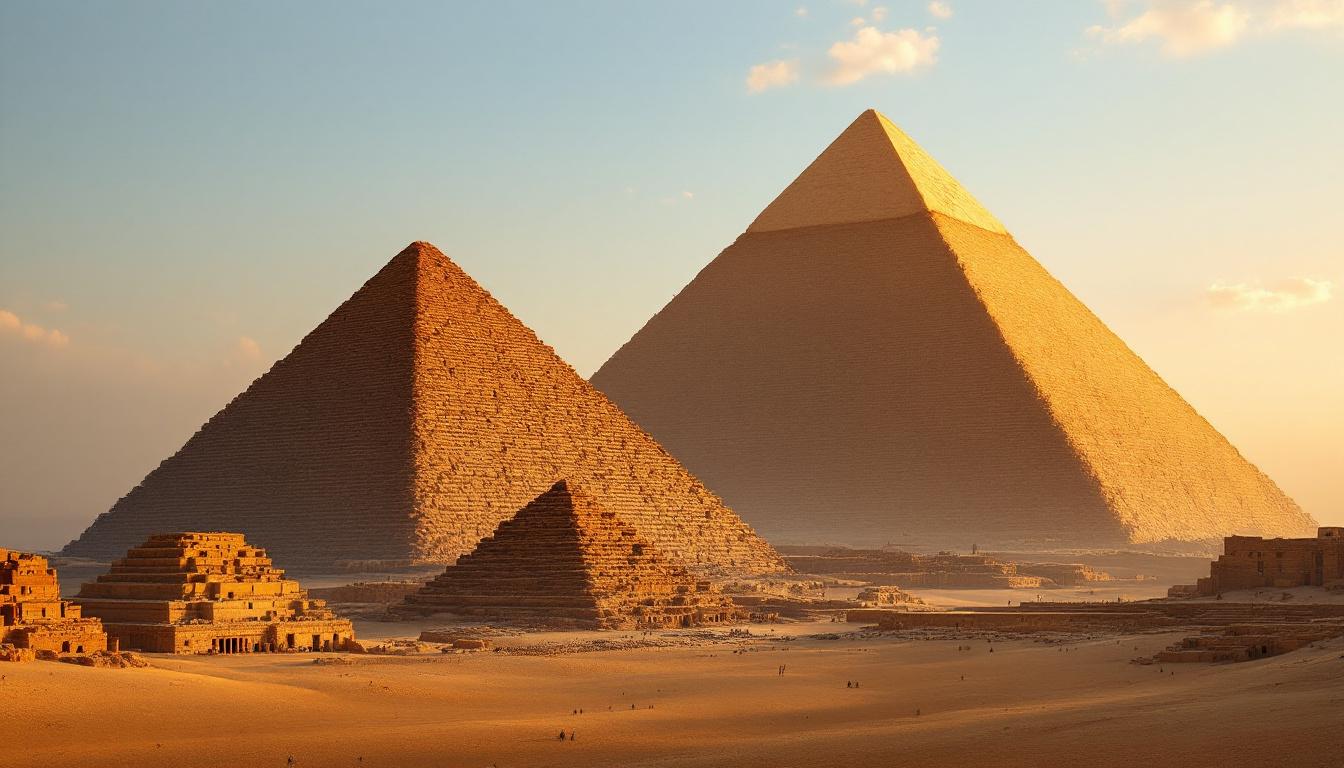
This unity of inquiry is visible across the ancient world. In Egypt, the harpedonaptai — the rope-stretchers, the land surveyors who remeasured fields after the annual Nile floods — were not engaged in a purely technical exercise. The precision of their measurements, the right angles they formed with knotted ropes in the ratio 3:4:5, was a sacred act of re-establishing order — Ma'at — after the chaos of the inundation. The temple itself was not merely a building. It was a geometric argument about the cosmos. Its proportions encoded the same ratios found in the human body and in the movements of the stars. To measure and align the temple correctly was to participate in the cosmic order, not merely to construct a shelter for ritual. The Great Pyramid at Giza encodes both π and φ in its geometry to a degree of precision that was not formally recognised by Western mathematics until millennia later. Whether this precision was intentional or an emergent consequence of working with a specific cubits-based proportional system is still debated — but the fact that the debate exists at all indicates that the connection is not trivial.
In India, the Sulbasutras — texts dating from roughly the eighth century BCE, concerned with the precise construction of fire altars — contain geometric knowledge equivalent to what we now call the Pythagorean theorem, formulated centuries before Pythagoras. The altars themselves were required to take specific geometric forms because the shape carried cosmological significance: an altar shaped like a falcon in flight carried a different ritual meaning than one shaped as a square of equal area, even though both satisfied the same area requirement. In China, the geomantic tradition of Feng Shui is fundamentally a study of geometric relationships between the built environment and the flows of energy in the landscape — a sacred geography rooted in careful geometric thinking about orientation, proportion, and the way forms channel or impede the movement of qi. Across the Islamic world, the arabesque and the geometric tile evolved over centuries into extraordinary complexity, not as decoration but as a meditation on unity and infinity: to subdivide a surface perfectly with repeating geometric forms is to demonstrate in visual form that the infinite and the finite coexist in the same space, that the infinite is not somewhere else but is present in every correctly proportioned unit.
What these traditions share is the conviction that geometry is not invented but discovered — that the forms and proportions that compass-and-straightedge construction reveals are not arbitrary human choices but genuine features of the structure of space itself. The ancient practitioner of sacred geometry was not decorating the world with pretty patterns. They were reading a language that the world itself was speaking, and they believed that understanding that language was one of the most important things a human being could do.
Geometry as Language
It can be helpful to think of conventional geometry as a language and sacred geometry as the study of what that language is saying. A language consists of elements — sounds, marks, characters — arranged according to rules. Learning the rules lets you form valid statements. But grammar alone does not explain why certain poems move people to tears, why certain words carry weight that their literal meaning cannot account for, why the same sentence can be heroic in one context and devastating in another. For that, you need another layer of understanding — sensitivity to resonance, to pattern, to the way form carries feeling and meaning beyond its literal content.
Sacred geometry operates at that second level. The forms themselves — circle, triangle, square, spiral, hexagon, pentagon — are the vocabulary. The rules by which they are generated from one another — always from the compass opening alone, always from intersection points, never from arbitrary external measurement — are the grammar. And the investigation of what those forms mean, why they recur in nature, how they express fundamental principles of existence, is the literature that the grammar makes possible. When a geometer draws the Vesica Piscis — the lens-shaped region formed by the intersection of two equal circles, each passing through the centre of the other — they are not merely describing a geometric figure. They are encountering a form that appears in Christian iconography as the mandorla surrounding the figure of Christ in glory, in the proportional system underlying the Gothic cathedral, in the shape of the human eye, in the cross-section of a cell in the earliest moments of division, and in the opening construction from which the equilateral triangle is born. The form is a node in a web of meaning that spans every scale of human experience.
This is why sacred geometry attracts not only spiritual practitioners but scientists and engineers who have no spiritual agenda whatsoever. Buckminster Fuller, whose geodesic domes represent some of the most elegant structural solutions in the history of engineering, was deeply engaged with sacred geometry — he understood that the icosahedron, the tetrahedron, and the octahedron were not arbitrary shapes but the most stable configurations that space can achieve under physical constraints of minimal energy and maximum structural efficiency. The mathematician Roger Penrose, exploring the purely theoretical question of whether a surface could be tiled aperiodically — without repeating — produced patterns that look extraordinarily like Islamic geometric art. Those patterns were later found to describe the atomic structure of quasicrystals, a discovery for which Dan Shechtman received the Nobel Prize in Chemistry in 2011. Islamic artists had been constructing equivalent geometric tilings since the thirteenth century. The sacred geometer would say: they were reading the grammar of space. The pattern was always there, waiting to be found.
Drawing Without Measurement
One of the most striking features of classical sacred geometry — and the one that most often puzzles people encountering it for the first time — is that it is performed without measurement. This is not a limitation but a philosophical commitment, and understanding it is essential to understanding what sacred geometry is actually doing.
When you fix a compass to draw the first circle, the opening of the compass defines a length. That length is ONE — the radius, the unit from which all subsequent relationships in the drawing will arise. You do not need to know, and you do not specify, whether that length is one centimetre or one metre or one royal cubit. It is simply ONE. Every other proportion in the entire drawing will arise from the relationship of subsequent forms to that original unit. The golden ratio φ (approximately 1.618), the square root of two (approximately 1.414), the square root of three (approximately 1.732) — all of these will emerge from the geometry itself, as necessary consequences of how overlapping circles interact. They do not need to be imposed from outside. They are already there, inherent in the structure.
This mirrors exactly the way nature constructs itself, and that mirroring is the philosophical argument for the practice. A cell does not consult a ruler before it divides. A crystal does not know its dimensions in millimetres — it grows according to the angular constraints of atomic bonding, and the proportions of its faces follow necessarily from those constraints. A nautilus shell does not calculate the golden ratio before adding each new chamber — it grows at a constant proportional rate, and the logarithmic spiral is the geometric consequence of that rate. The proportions are intrinsic to the process, not imposed upon it from outside. Classical sacred geometry works the same way: the process generates the proportions. Measurement — the imposition of an external numerical scale — is not needed and would in fact obscure what is happening, by reducing a relationship between forms to a number that carries no information about why the relationship has the value it does.
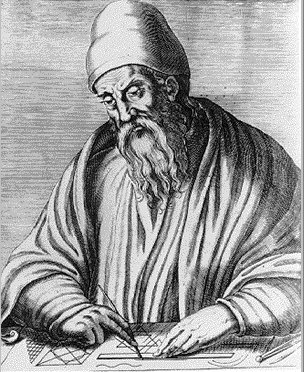
This was understood with perfect clarity in antiquity. Euclid's Elements, the foundational text of Western geometry, begins with a compass-and-straightedge construction of an equilateral triangle on a given line segment. The length of that segment is not specified. The triangle is correct and perfect regardless of the scale. Every proposition in all thirteen books of the Elements works the same way — the conclusions are always proportional, always scale-invariant, always independent of the particular unit chosen. The insight embedded in this practice is that geometric truth is scale-free. The relationship between the diagonal and the side of a square is always √2, whether the square is the size of a thumbnail or the size of a wheat field. Sacred geometry takes this mathematical reality and asks what it implies: if the fundamental truths of geometry are the same at every scale, what does this tell us about the nature of space, and about the nature of the mind that is capable of recognising those truths?
The Two Primal Tools
The compass and the straightedge are the only tools used in classical sacred geometry. No protractor, no ruler, no set square — just these two instruments, and from them alone every construction proceeds. Their simplicity is deceptive. Together they can generate the complete vocabulary of Euclidean geometry: every regular polygon, every irrational proportion, every form that appears in the natural world at every scale. They are also, in the symbolic language of sacred geometry, the representatives of two fundamental and complementary principles that between them account for everything that exists.
The compass draws circles. It generates the curved, the cyclical, the complete, the enclosing. In sacred geometry, the compass is associated with the feminine principle — not in any reductive or biological sense, but in the sense of receptivity, wholeness, the containing space within which things can grow and differentiate. The circle is the womb of all geometry: every other form is born inside it or between circles. The compass embodies expansion — when you open it wider, the circle grows; the same centre, but a new world of larger circumference. Expansion without displacement, growth without abandoning the origin, is a quality associated throughout world philosophy with the principle of abundance, of love, of the universe growing from its centre outward into increasing complexity while remaining perfectly unified.
The straightedge draws lines. It generates the directed, the penetrating, the decisive, the dividing. In sacred geometry the straightedge is associated with the masculine principle — not dominance, but direction, intention, the expression of vector upon a field. The line does not enclose anything. It goes somewhere. It is committed. It divides what was undivided; it distinguishes here from there; it creates the horizon. In the practice of sacred geometry, lines are always drawn between two points that have already been defined by circle intersections — the straightedge cannot act until the compass has prepared the ground. This relationship between the two tools is itself a philosophical statement about polarity and creation: direction requires a field to act within; intention requires a space of possibility; the principle of division requires the principle of wholeness as its prior condition and its matrix.
Together, the compass and straightedge constitute the most complete toolkit imaginable for exploring the geometry of space — and they are also the most democratic tools imaginable. They cost almost nothing. They require no electricity, no software, no specialist knowledge to operate. Any human being with a compass, a straightedge, and a piece of paper can begin constructing the same forms that Egyptian temple builders, Greek philosophers, Islamic tile craftsmen, and Gothic cathedral architects were constructing. The tradition is open to anyone who approaches it with patience and a willingness to follow the rules.
What Sacred Geometry Is Not
It is worth being direct about what sacred geometry is not, because the tradition has been misrepresented in both directions — dismissed as superstition and wishful thinking on one side, and overclaimed as a master key to the universe that unlocks every mystery on the other. Neither of these positions does justice to what the tradition actually contains.
Sacred geometry is not a religious belief system. You do not need to hold any spiritual or religious conviction to engage with it productively. The geometric patterns exist, and their consistent recurrence in nature and in human culture across all eras and civilisations is an observable fact that requires no metaphysical explanation to notice. 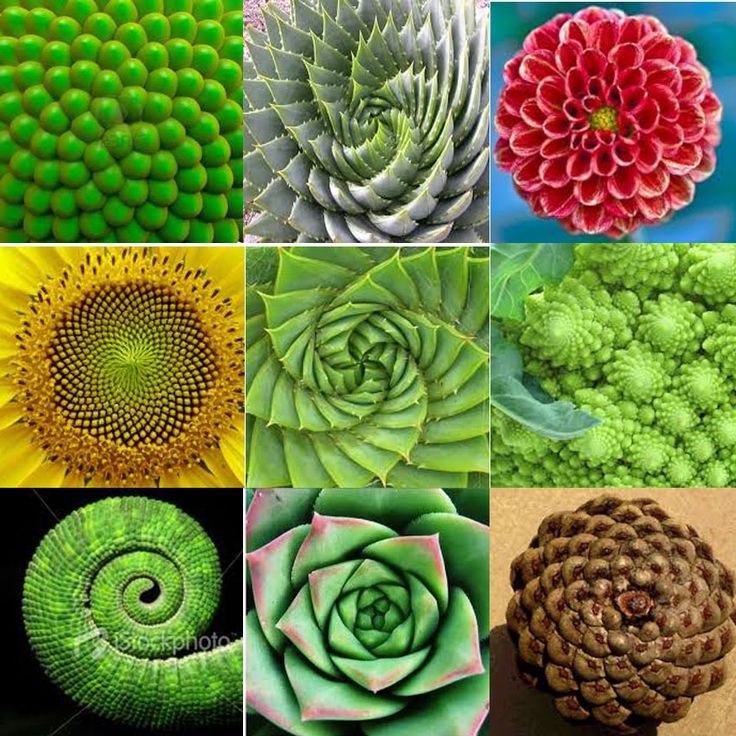
The golden ratio genuinely appears in the growth patterns of plants, in the proportions of the human body, in the spiral structure of galaxies. The hexagonal lattice genuinely emerges from the physics of close-packing and surface tension and crystallography. The five Platonic solids genuinely exist as the only possible regular convex polyhedra in three-dimensional space — a mathematical fact that can be proved rigorously without any appeal to esoteric tradition. Sacred geometry begins with these facts and asks: why? That question can be approached from a scientific angle, a philosophical angle, a spiritual angle, or purely an aesthetic angle. All of these are legitimate approaches. None of them invalidates the others.
Sacred geometry is equally not a numerological code in which specific numbers have magical powers, nor a secret system that proves one ancient civilisation was more advanced than all others, nor a conspiracy of suppressed knowledge being concealed from the public. The tradition has attracted these kinds of interpretations over the centuries, and they tend to distort and diminish it rather than illuminate it. The genuine insight of sacred geometry — that the universe organises itself according to a small number of elegant proportional and geometric principles that appear consistently at every scale — is remarkable enough without requiring embellishment. It does not need to be stranger than it is. It is already extraordinary.
The distinction that matters is between observation and projection. Sacred geometry at its best is careful observation: this pattern appears here, and here, and here; let us understand why. Sacred geometry at its worst is projection: this pattern must appear everywhere, and if I squint at anything hard enough I can find it. The honest practice requires willingness to distinguish between genuine recurrence and wishful seeing, between structural necessity and coincidental resemblance. That discipline is what keeps the tradition alive as a genuine inquiry rather than a closed system of confirmation.
Who Carried the Tradition?
Sacred geometry has been carried through history by a remarkably diverse community: temple architects and cathedral builders, astronomers and natural philosophers, painters and sculptors, tile-makers and manuscript illuminators, mathematicians and mystics. What they share is not a religion or a theoretical system but a practice — the practice of working with geometric forms according to classical rules and attending carefully to what those forms reveal when the rules are followed.
In ancient Egypt, the knowledge was held by the temple priests and master builders, who were often the same people. The construction of a sacred building was itself a ritual act, requiring knowledge of geometry, astronomy, mythology, and ritual simultaneously. In Pythagorean Greece, geometric knowledge was taught within philosophical brotherhoods under conditions of initiation and sworn secrecy — not because the knowledge was dangerous, but because it was regarded as too significant to be treated casually. In the Islamic world, the tradition was carried by architects, mathematicians, and master tile craftsmen who operated within a culture where the distinction between artisan and scholar was not sharp, where the craftsman who could construct a perfect twelve-fold geometric tiling was regarded as a participant in the revelation of divine order. In medieval Europe, it lived in the lodges of the cathedral builders — the origin of the Masonic tradition — where the master masons who knew how to derive the proportions of a Gothic vault from circle constructions were the possessors of genuine technical secrets, not merely symbolic ones.
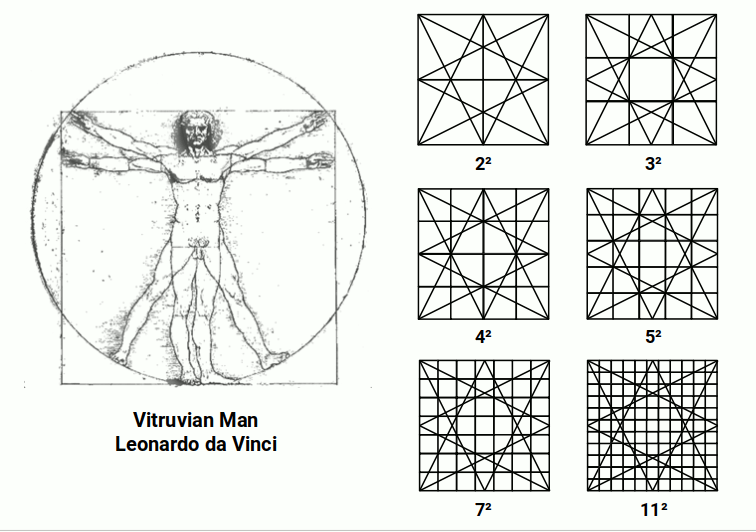
In the Renaissance, sacred geometry flowed through artist-scholars like Leonardo da Vinci and Luca Pacioli, whose De Divina Proportione (1509) brought the golden ratio and its geometric applications explicitly into the domain of typography, painting, and architecture, illustrated with Leonardo's extraordinary drawings of the Platonic and Archimedean solids. In the modern era, the tradition was significantly revived by Robert Lawlor, whose 1982 book Sacred Geometry: Philosophy and Practice brought the term into wide circulation and provided a rigorous, philosophically serious account of the tradition grounded in the work of René Schwaller de Lubicz's decades-long study of Egyptian temple proportions. Simultaneously, and largely independently, researchers in biology, physics, and materials science were rediscovering geometric principles that the ancient tradition had always known. Today the tradition lives at an interesting intersection of the academic, the practical, and the contemplative — taken seriously enough to be taught in design schools, studied by physicists working on the geometry of spacetime and quantum fields, and practised by artists and meditators as a form of engaged inquiry into the deep structure of the visible world.
Why It Matters Now
We live in a moment of intense specialisation. The natural philosopher who was simultaneously a mathematician, a theologian, an artist, and an astronomer — a figure common in the ancient world and not unusual in the Renaissance — has become nearly impossible in a culture where disciplines divide and subdivide to the point where colleagues in adjacent research departments sometimes struggle to understand each other's work. This specialisation has produced extraordinary power and precision. But something has also been lost — the sense that all these inquiries are aspects of a single investigation, that the patterns found by the physicist and the patterns drawn by the artist and the patterns described by the philosopher are different views of the same underlying reality.
Sacred geometry is one of the places where that unified sense of inquiry survives. It is a tradition that refuses to separate beauty from truth, art from mathematics, the physical from the meaningful. These are not arbitrary refusals — they are based on the observation that nature itself does not make these separations. The double helix of DNA is a beautiful form because it is an optimally efficient one, and it is efficient because the geometric constraints of base-pair bonding and helical rotation interact in a way that is, in the deepest sense, necessary. The hexagonal honeycomb is beautiful because it is the solution to the problem of dividing a plane into equal cells of minimum perimeter — a mathematical optimisation that bees solve through the physics of wax under compression, without any awareness that they are doing geometry. The beauty is the truth. The form is the function. Sacred geometry starts from the observation that this is consistently the case throughout nature and asks what it implies.
When you sit down with a compass and straightedge and begin to draw — when you watch the Flower of Life emerge from successive overlapping circles, when you see the golden rectangle generate itself from a square and a half-diagonal, when the five-fold symmetry of the pentagon appears as though it were always waiting just below the surface of the page — you are having an experience that mathematicians, artists, architects, and contemplatives have been having for thousands of years. You are reading the native language of space. And once you have learned to read it, you begin to see it everywhere: in the branching of trees, in the arrangement of seeds, in the proportions of faces, in the structure of crystals, in the interference patterns of waves. The world has been speaking this language continuously. Sacred geometry is simply the practice of learning to listen.
In the next chapter, we explore Tools & Rules — the compass and straightedge that have served as sacred geometry's only instruments for thousands of years.
FAQ
What is the difference between sacred geometry and regular geometry?
Regular geometry describes what shapes are and how to calculate their properties. Sacred geometry adds a layer of inquiry — it asks why certain proportions recur throughout nature, why cultures across the world converge on the same geometric symbols, and what these patterns reveal about the structure of reality. Both use the same forms; they ask different questions.
Do I need to be spiritual or religious to study sacred geometry?
No. Sacred geometry does not require any spiritual or religious belief. The geometric patterns exist as observable mathematical and natural facts. The tradition can be approached from a scientific, philosophical, aesthetic, or spiritual angle — all are equally valid.
Why is sacred geometry drawn without measurement?
The most significant geometric relationships — the golden ratio, √2, √3 — are ratios, not fixed lengths. They are scale-free and hold true at every size. By working without a ruler, the practitioner engages with pure proportion rather than approximate numerical values, mirroring the way nature itself constructs forms through intrinsic geometric constraints rather than external measurement.
Is sacred geometry a real science or pseudoscience?
Sacred geometry is rooted in genuine mathematical facts — the five Platonic solids, the golden ratio in biological growth, hexagonal close-packing in crystals — all of which can be proved rigorously. Where it goes beyond conventional science is in asking why these patterns recur so consistently, a question that science tends to set aside rather than answer.