Introduction
Triangles are the simplest polygon and the fundamental building block of all geometry. Every polygon can be divided into triangles, and the properties of triangles underpin most of what follows in this guide. This chapter covers triangle types, the essential congruence theorems, the Pythagorean theorem, and the basic area formula.
Key Takeaways
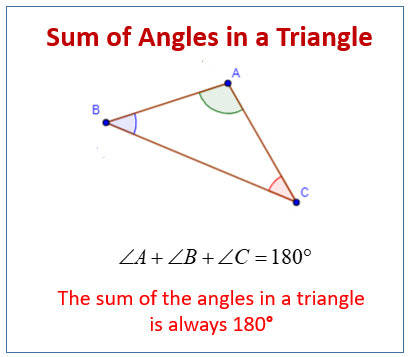
- The sum of the interior angles of any triangle is 180°.
- Two triangles are congruent if SSS, SAS, ASA, or RHS conditions are met.
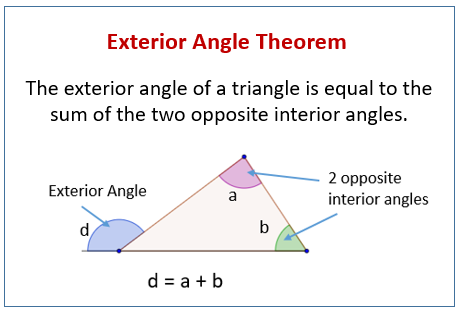
- The exterior angle of a triangle equals the sum of the two non-adjacent interior angles.
- Pythagoras' Theorem: in a right triangle, the square on the hypotenuse equals the sum of squares on the other two sides.
- The medians, angle bisectors, and altitudes of a triangle each meet at a single point (they are concurrent).
What is a Polygon?
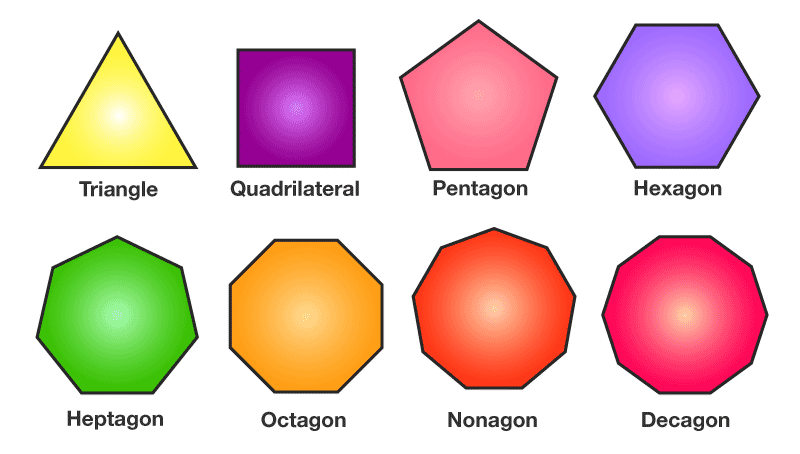
The figure formed by a non-self-intersecting closed broken line together with the part of the plane bounded by that line is called a polygon. The sides and vertices of this broken line are called respectively the sides and vertices of the polygon, and the angles formed by each two adjacent sides are the interior angles. The smallest number of sides in a polygon is three. Polygons are named according to the number of their sides: triangles, quadrilaterals, pentagons, hexagons, and so on.
The Triangle
The triangle is a geometrical figure contained by three straight lines. Every triangle has three sides and three angles. It is the most basic as well as the most important shape — a prime figure, meaning it cannot be divided into any simpler figure. The triangle serves as the basis for understanding all other geometrical figures and their properties. It is the only rigid figure among all polygons: unlike higher polygons, a triangle has no scope for "wiggling" and can be completely defined using the least number of parameters.
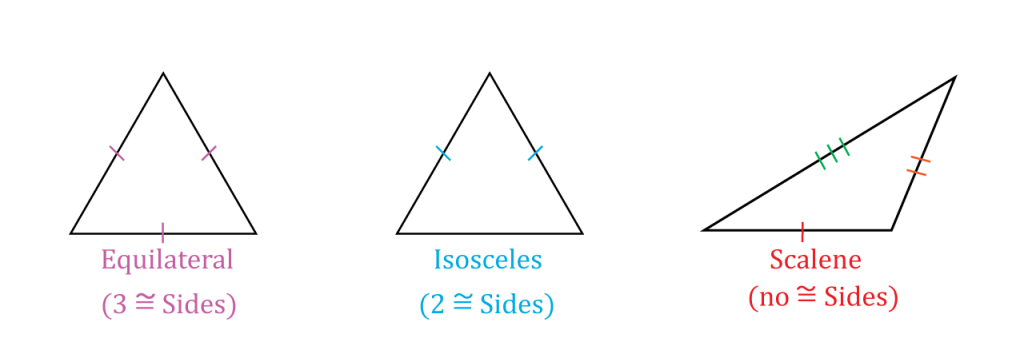
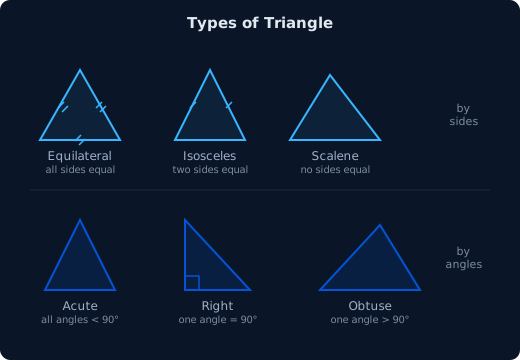
Classification by Sides
- Equilateral — all three sides equal in length
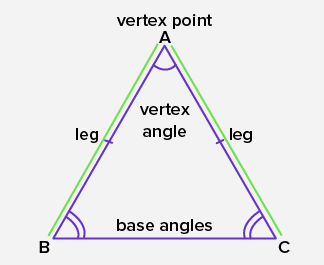
- Isosceles — two sides equal in length
- Scalene — all three sides of different lengths
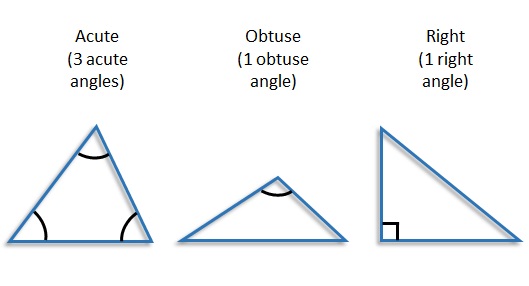
Classification by Angles
- Acute — all angles are acute
- Obtuse — one angle is obtuse
- Right — one angle is a right angle
Congruence
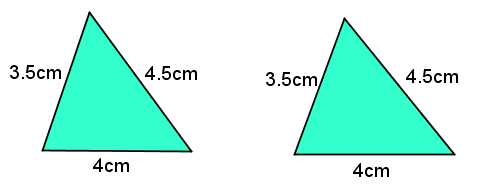
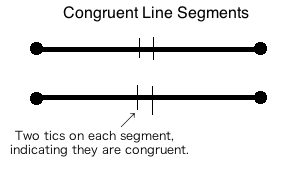
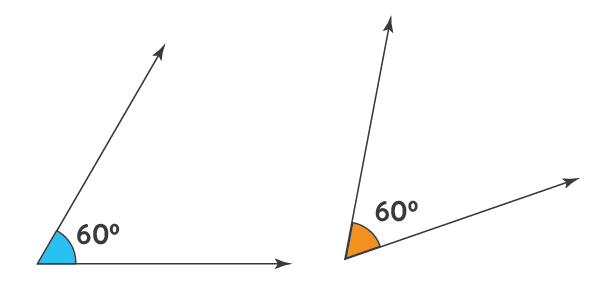
Geometrical objects are said to be congruent when they have the same shape and size — the geometrical equivalent of "equal". Two geometric figures are congruent if they can be identified with each other by superimposing.
Conditions for Triangle Congruence
- SAS (Side-Angle-Side) — two sides and the included angle of one equal those of the other
- SSS (Side-Side-Side) — all three sides of one equal the three sides of the other
- ASA (Angle-Side-Angle) — two angles and the included side equal those of the other (also implies AAS)
- RHS (Right-angle-Hypotenuse-Side) — for right triangles: hypotenuse and one side equal
Important Lines in a Triangle
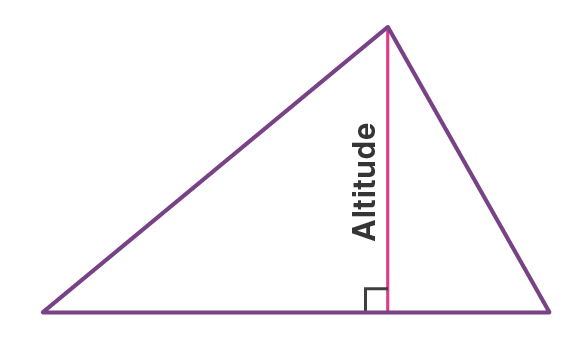
Altitude — the perpendicular dropped from a vertex to the base or its continuation.
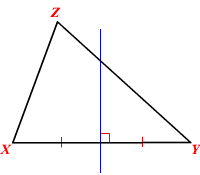
Perpendicular Bisector — a line that bisects a given line and is perpendicular to it. The locus of a point equidistant from the extremities of a given line is its perpendicular bisector.
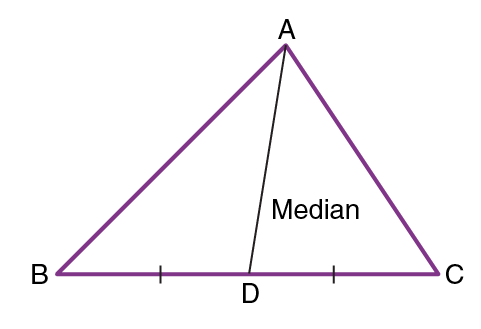
Median — a line from any vertex to the midpoint of the opposite side.
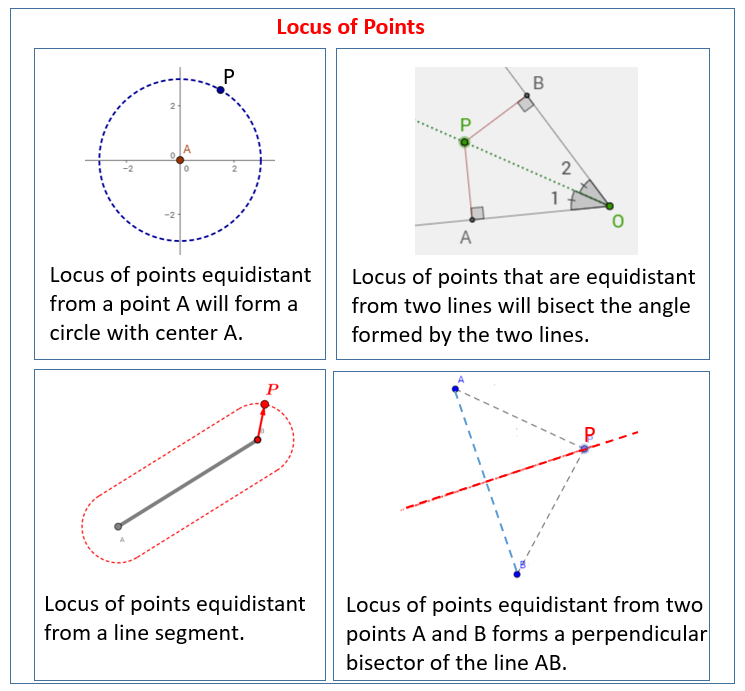
Locus — the path of a point that moves in accordance with certain given geometric conditions.
Concurrent Lines
- The bisectors of the angles of a triangle are concurrent in a point equidistant from the sides.
- The perpendiculars from the vertices to the opposite sides are concurrent.
- The medians of a triangle are concurrent in a point two-thirds of the distance from each vertex to the midpoint of the opposite side.
Triangle Theorems
Angle Sum Property — The sum of the three angles of a triangle equals two right angles.
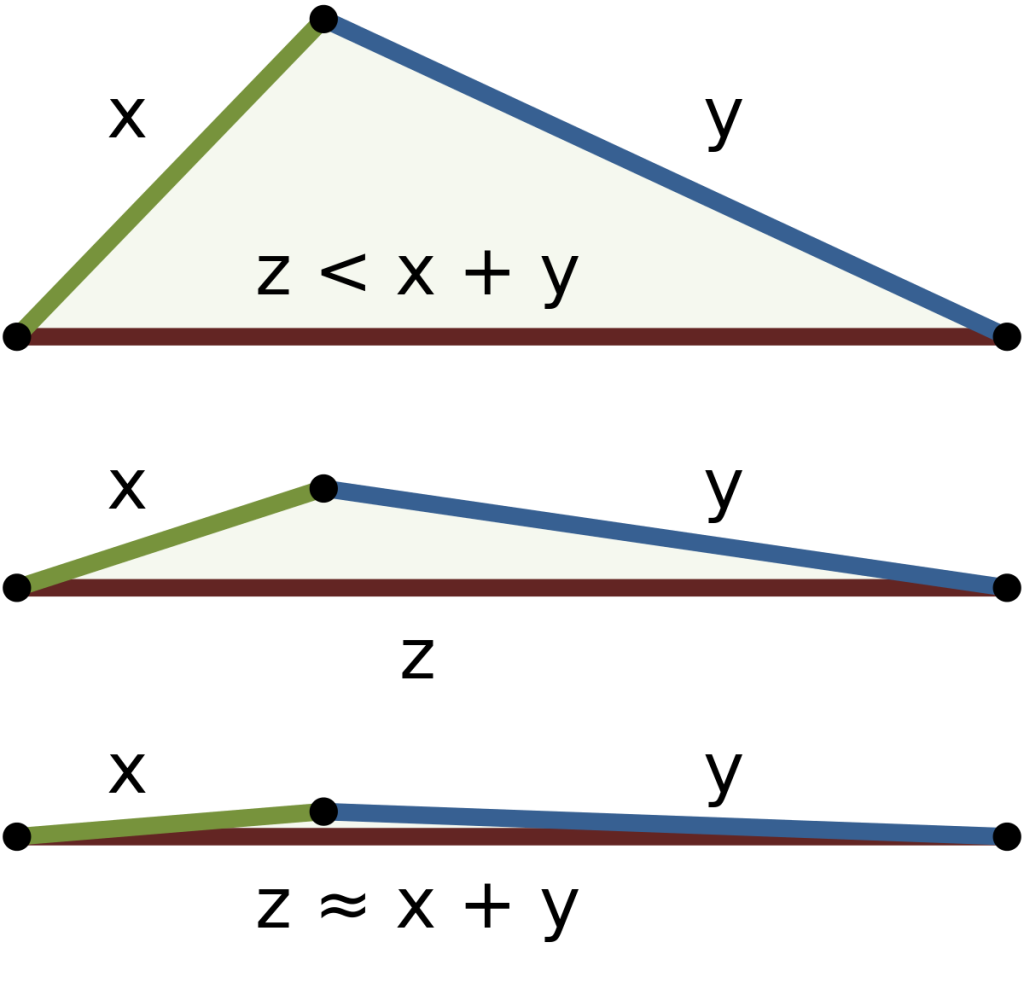
Triangle Inequality — The sum of any two sides of a triangle is greater than the third side; the difference of any two sides is less than the third side.
Exterior Angle Theorem — If one side of a triangle is produced, the exterior angle equals the sum of the two interior and opposite angles.
Triangles and Parallel Lines: - Triangles on the same base and in the same parallels are equal to one another. - Triangles on equal bases and in the same parallels are equal to one another.
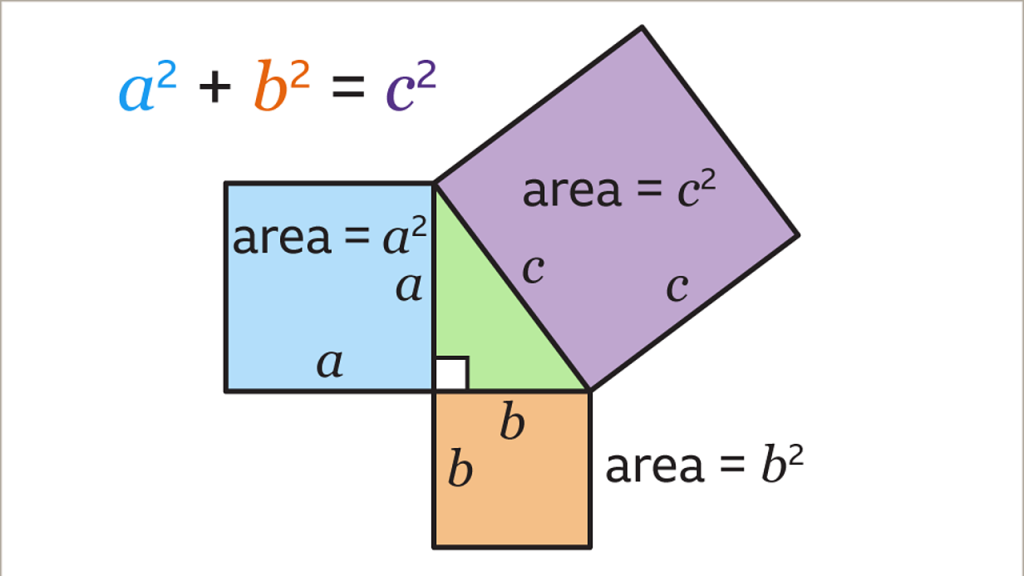
Pythagoras' Theorem — In right-angled triangles the square on the side opposite the right angle equals the sum of the squares on the sides containing the right angle. Conversely, if in a triangle the square on one side equals the sum of the squares on the remaining two sides, the angle contained by those two sides is a right angle.
Area of a Triangle
The area of any triangle can be computed from base and height:
where the height (altitude) is the perpendicular distance from the base to the opposite vertex. For a right triangle with legs a and b, this simplifies to ½ab. For a triangle with two known sides a and b and included angle C, the area is ½ab sin C.
Frequently Asked Questions
What is the difference between congruent and similar triangles?
Congruent triangles are identical in both shape and size — one can be superimposed on the other exactly. Similar triangles have the same shape (equal angles) but different sizes — their corresponding sides are in proportion but not necessarily equal. Every pair of congruent triangles is also similar, but not vice versa.How many conditions are needed to determine a triangle uniquely?
Three independent pieces of information are generally sufficient: three sides (SSS), two sides and the included angle (SAS), two angles and one side (ASA or AAS), or for right triangles the hypotenuse and one other side (RHS). Knowing only three angles (AAA) gives the shape but not the size — infinitely many similar triangles satisfy it.Why does the angle sum of a triangle equal 180°?
Draw a line through the apex parallel to the base. The two angles on either side of the apex equal the base angles of the triangle (alternate interior angles, since the line is parallel). The three angles at the apex then form a straight line, so they add to 180°. This proof relies on Euclid's parallel postulate.What is the Pythagorean theorem and when does it apply?
In any right-angled triangle with legs a and b and hypotenuse c, a² + b² = c². It applies only to right triangles. The converse is equally important: if a² + b² = c² for the three sides of a triangle, then the angle opposite c is exactly 90°. This is used in construction and surveying to check that corners are square.What are the special centres of a triangle?
Four classical centres exist. The **centroid** is where the three medians meet — the triangle's centre of mass. The **circumcentre** is where the three perpendicular bisectors meet — the centre of the circumscribed circle. The **incentre** is where the three angle bisectors meet — the centre of the inscribed circle. The **orthocentre** is where the three altitudes meet. All four are different points in a general triangle, but coincide in an equilateral triangle.Conclusion
Triangles are the structural unit of all polygon geometry — every polygon can be triangulated, and every area formula ultimately rests on the triangle. The congruence conditions, angle sum, and Pythagorean theorem together form a toolkit that recurs throughout the rest of the guide, from similarity and trigonometry to the face geometry of three-dimensional solids. Understanding triangles thoroughly is understanding the engine of Euclidean geometry.
The next chapter extends the study to four-sided figures — Quadrilaterals.