Are numbers real? And if so, do they predate the notion of reality? It is rare that we consider the origin of mathematics and number, yet when we do, we begin to realise that reality itself could never have come into existence without them.
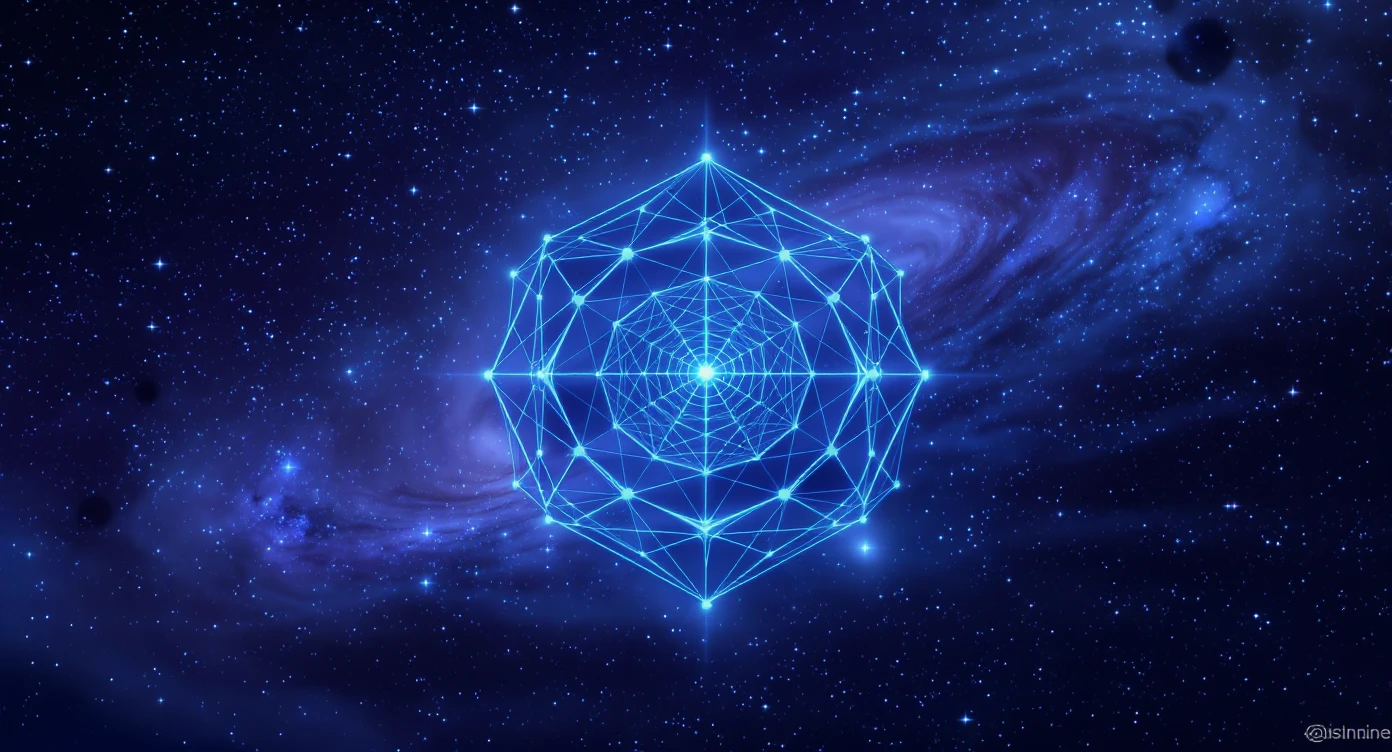
From galactic spirals that follow the Golden Ratio, through the geometry of our Solar System, to the growth of life on Earth encoded in the Fibonacci sequence — and further down to the doubling sequence of cell division and the binary spin states of the electron — a single numerical framework appears at every scale of existence.
Are Numbers Real?
The concept of number is central to the nature of reality, which comprises objects in space. Space and time lie at the heart of all experience, and both are measured by number. Whilst humanity has developed many sophisticated mathematical systems for modelling reality, there is a deeper question that is rarely asked: what is number itself?
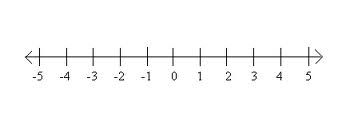
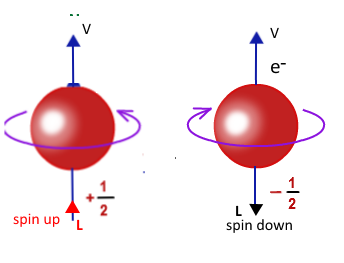
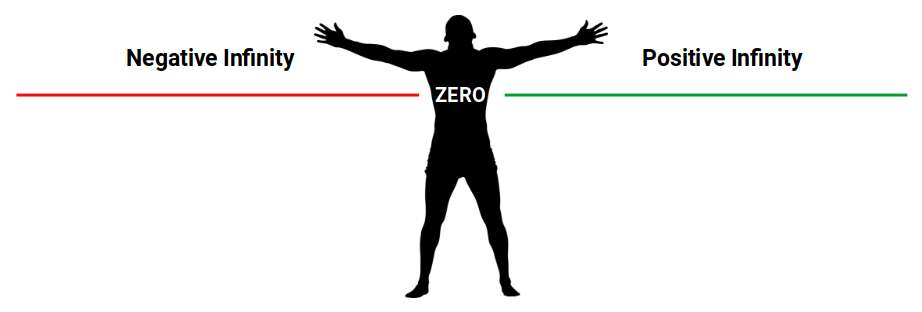
From the perspective of mathematics, zero sits at the centre of an infinite set of positive and negative whole numbers, dividing the number line into two symmetric infinite sets. The same binary structure appears throughout physics: electrons can only occupy an up or down spin orientation, and all light waves are sinusoidal — oscillating across the zero line. Number is not merely a human tool; it appears to be woven into the structure of reality.
Could the nature of number extend beyond our 3D reality? We already use lower-dimensional numerical concepts — the point (0D), line (1D), and plane (2D) — to model space. Mathematics extends naturally into higher dimensions too. What is significant about geometric number is that it is spatial in nature: a cube does not require a mathematical equation to exist in space — it is its own representation. Two cubes in ratio to each other express that ratio without calculation. Geometry, ratio, and dimension are therefore forms of number that transcend human convention — direct expressions of reality itself.
Division Creates Polarity
If we consider a completely neutral and undifferentiated infinite space, division would split it into two equal and opposite infinite parts — positive and negative. Zero is the product of this division: the boundary point between two polarities. From this perspective, division is the first mathematical operation, preceding addition and subtraction.
Addition and subtraction can be understood as the combination of numbers of differing polarity. We normally omit the + symbol in front of positive numbers, but both operations simply move along the number line in one direction or the other. Zero is the point that separates these two polarities, and it arises through the process of division — which is why the zero boundary has the properties it does.
The Doubling Sequence
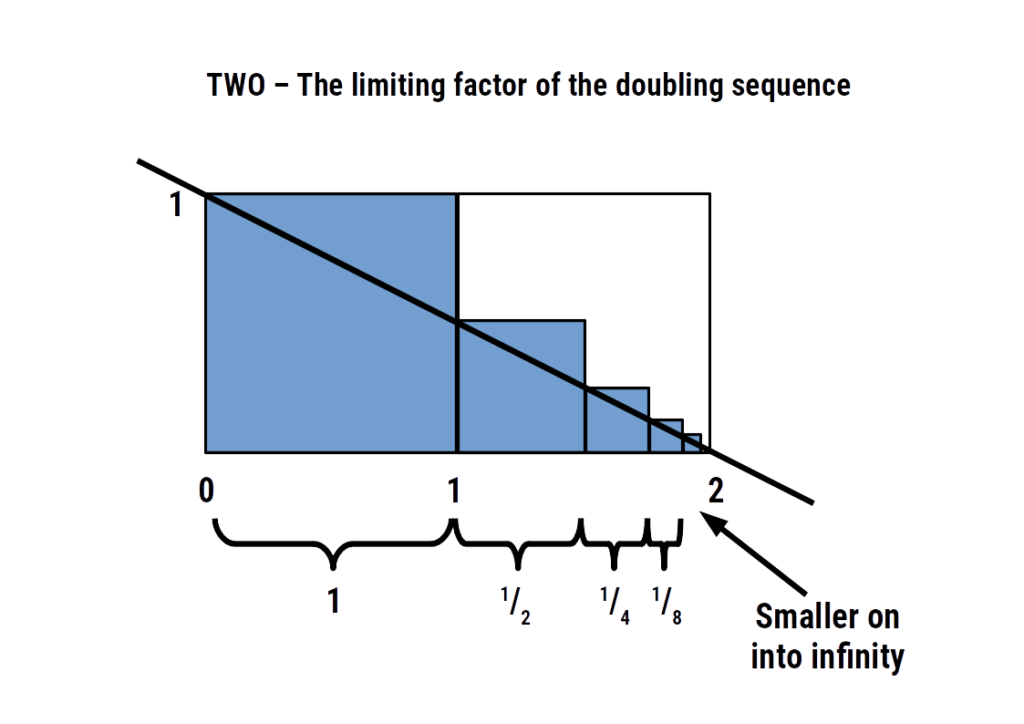
Once the zero boundary is established, the space between zero and one — reciprocal space — contains the potential for all other numbers. Repeated division of this space produces a doubling sequence: each division creates a halfway point (0.5), then quarters (0.25), eighths (0.125), and so on. Viewed from the whole number side, this generates the sequence 2, 4, 8, 16... extending into infinity.
Cellular Division
The doubling sequence is not an abstraction — it is the mathematical basis of biological life. All multicellular organisms begin as a single cell that divides into 2, then 4, then 8, on consecutive cycles. This doubling continues until a rapid increase in differentiation begins.
Every animal on Earth begins life in exactly the same way. The fact that this fundamental mathematical process — pure binary doubling — underlies the formation of all complex life suggests that the relationship between number and biology is not coincidental.

Fibonacci Numbers
Beyond the cellular scale, life adopts a more complex numerical series: the Fibonacci sequence. Beginning with 1 + 1 = 2, each subsequent term is the sum of the two preceding ones: 1, 1, 2, 3, 5, 8, 13, 21... When these numbers are arranged as squares in a rectangle, they generate a spiral — one of the most recognisable patterns in nature.
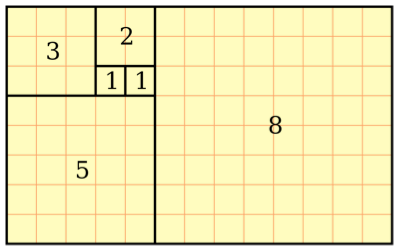
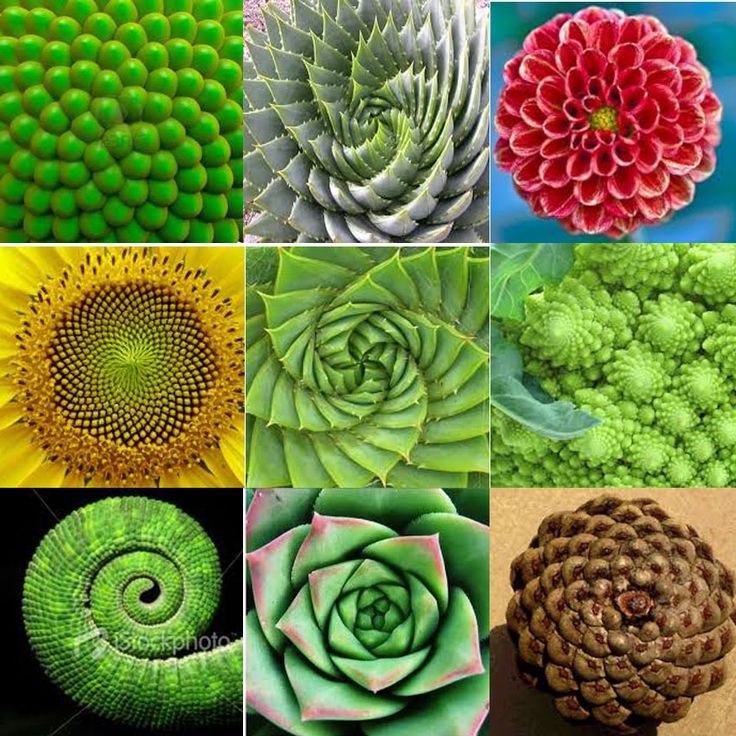
Note that the sequence begins with two identical units — a direct echo of the doubling sequence that precedes it at the cellular scale. The transition from doubling to Fibonacci marks the shift from simple replication to complex, proportional growth.
The Solar System
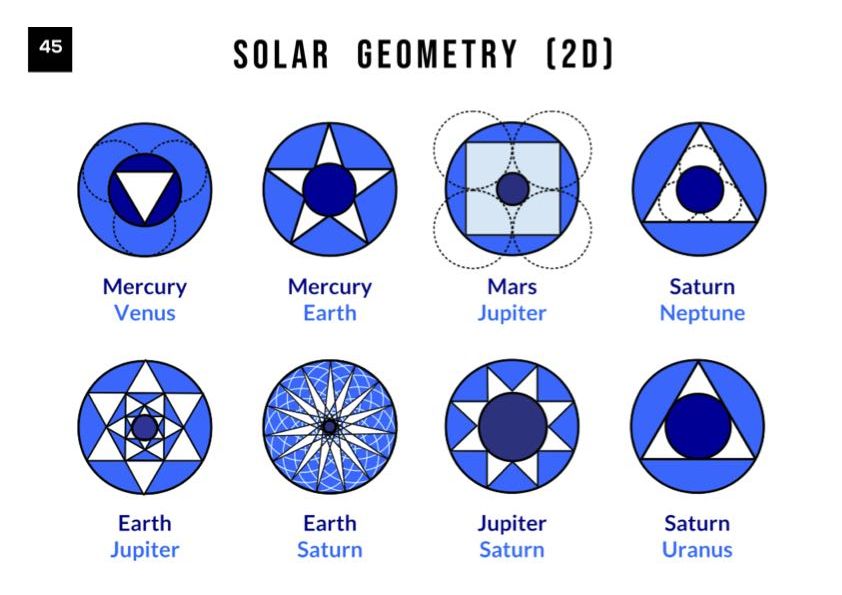
The structure of number extends to the astronomical scale. The mean orbital spacings of the planets in our Solar System can be mapped with surprising accuracy using simple geometric forms: the triangle, square, pentagon, and their associated ratios.
Galaxies and Beyond
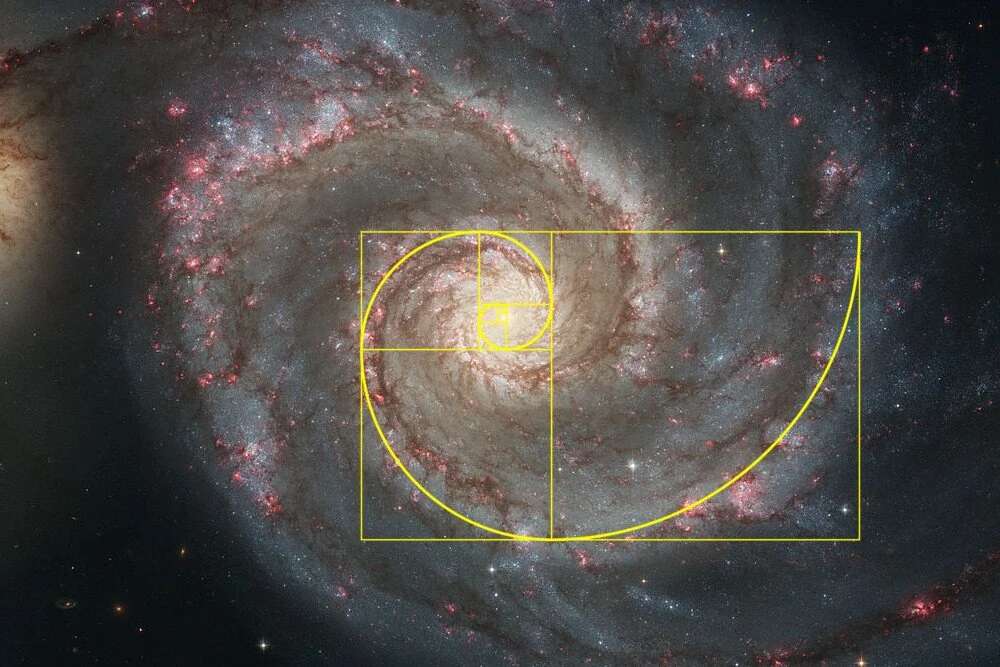
The Milky Way is a spiral galaxy whose arms closely follow the Golden Spiral — generated by the 5-pointed star, which produces an ever-smaller version of itself towards its centre through the Golden Ratio. The same geometric proportion that governs cellular growth, plant structure, and planetary spacing also shapes the large-scale structure of galaxies.
From the quantum spin of electrons to the spiral arms of galaxies, a single numerical framework — built from division, polarity, doubling, and ratio — appears to underpin the structure of reality at every scale.
The Fourth Dimension
Beyond 3D space lies the 4th dimension: time. In Geometric Maths, spacetime is understood to have a geometric nature. A 4D object can be rotated on its time axis (the w-axis) whilst appearing stationary from a 3D perspective — just as a physical object in space remains fixed in our environment while still moving through time.
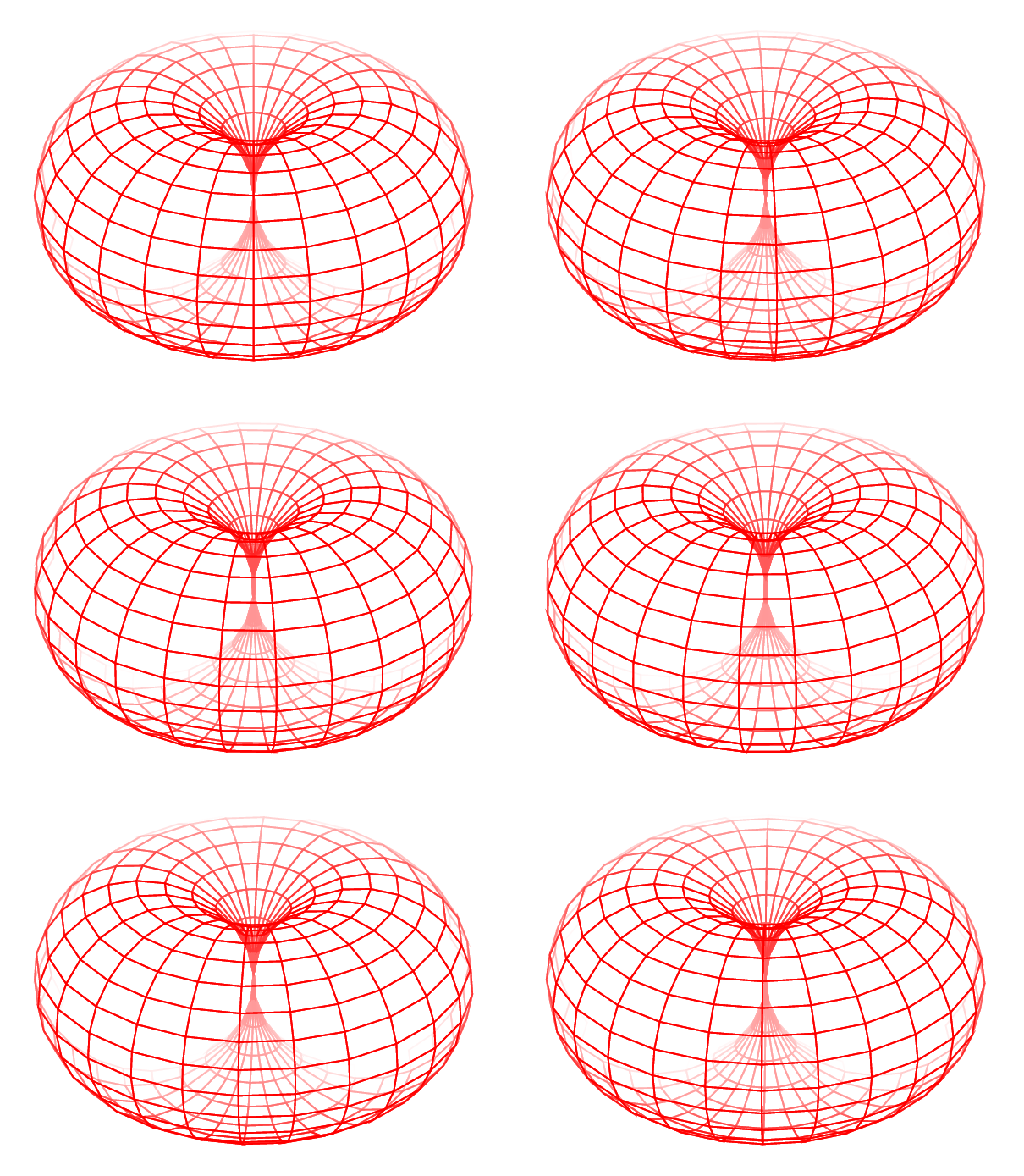
The simplest 4D form is the torus. Torus fields appear throughout nature at multiple scales: the Earth is enclosed in a toroidal electromagnetic field, atoms exhibit polar magnetic fields, and many molecules — including water — share this same dipolar topology.
The 4D cube, or tesseract, appears in 3D as two cubes superimposed in the same space. The cube is the only regular solid that fills space completely by itself — which explains the isotropic, flat nature of space, allowing distances between stars to be calculated using simple Pythagorean geometry. Time-space is rendered by the 4D cube: one cubic unit of space succeeded by the next, producing the flow of moments.

Conclusion
Numbers are not merely human inventions. They are intrinsic to the structure of reality: from the binary polarity that divides the number line and governs electron spin, through the doubling sequence of biological cell division, the Fibonacci proportions of organic growth, the geometric spacing of planetary orbits, and the spiral structure of galaxies, to the 4D geometry of spacetime itself.
The key insight is that division — not addition — is the foundational mathematical operation. It generates zero, defines polarity, and establishes the unit measure from which all other mathematical functions follow. Geometry and ratio, being spatial in nature, are forms of number that transcend human convention. They are the language in which the universe is written.