Introduction
Most people know that sound cannot travel through the vacuum of space. What fewer people know is that, given the right medium, sound can travel through space — and in the hot plasma of the early universe, it did so at a speed with a startling geometric relationship to the speed of light.
In the primordial universe, roughly 380,000 years after the Big Bang, the entire cosmos was a dense, glowing plasma of photons and charged particles. Through that plasma, sound waves propagated at exactly c/√3 — one divided by the square root of three times the speed of light. This is not an approximation. It is a precise result of relativistic fluid dynamics.
Now apply Dimensionless Science: strip away the units, express the speed of light as the pure number 3. The speed of sound becomes:
Sound speed is the square root of the (dimensionless) speed of light. A relationship that is completely hidden in standard SI notation becomes geometrically obvious the moment you remove the units.
Key takeaways
- In the hot plasma of the early universe, sound travelled at c/√3 — not an approximation but the exact theoretical maximum set by relativistic fluid dynamics for any radiation-dominated medium.
- In the Dimensionless Science framework where c=3, the primordial sound speed becomes exactly √3, revealing that sound speed is the square root of the dimensionless speed of light — a clean mathematical relationship that is completely invisible in standard SI notation.
- Those primordial sound waves left a permanent fossil in the cosmos: Baryonic Acoustic Oscillations, a preferred galaxy-pair separation of ~150 megaparsecs that cosmologists now use as a standard ruler to measure the universe's expansion history.
Sound Speed Depends on the Medium
To understand why this matters, it helps to first ask: why does sound travel at different speeds through different materials?
Sound is a pressure wave — a series of compressions and rarefactions that passes energy from one particle to the next. How quickly that transfer happens depends on two things: how stiff the medium is (its elasticity) and how dense it is. Stiffer and lighter = faster sound.
| Medium | Speed of sound | Notes |
|---|---|---|
| Air (20 °C) | 343 m/s | You hear thunder ~3 s after the lightning per km |
| Water | ~1,480 m/s | 4× faster — whales communicate over thousands of km |
| Steel | ~5,100 m/s | 15× faster than air — used in ultrasonic testing |
| Diamond | ~12,000 m/s | Stiffest natural material — fastest sound in a solid |
| Solar plasma (photosphere) | ~100,000 m/s | Helioseismology detects these waves on the Sun's surface |
| Primordial plasma (early universe) | c / √3 ≈ 173,000,000 m/s | Theoretical maximum — radiation-dominated plasma |
Notice the progression: as the medium becomes stiffer and denser, sound speeds up — eventually, in the right conditions, approaching a significant fraction of the speed of light itself.
The logical question is: what is the theoretical maximum speed of sound? In an infinitely dense, radiation-dominated medium — where the pressure is provided by photons rather than atomic collisions — relativistic fluid dynamics gives a definitive answer:
This is not a guess or an estimate. It comes directly from the relativistic equation of state for a photon gas, where radiation pressure equals one third of the energy density.
The Primordial Universe: When Space Was Full of Sound
For the first 380,000 years after the Big Bang, the universe was too hot for neutral atoms to exist. Every electron was stripped from every proton, forming a dense, glowing plasma — more like the interior of a star than anything we experience today.
In this plasma, light and matter were locked together. Photons could not travel freely; they scattered endlessly off the charged particles, creating an intense radiation pressure. That pressure drove acoustic oscillations — sound waves on a cosmic scale — through the entire observable universe simultaneously.
These waves compressed and rarified the plasma rhythmically, like sound bouncing inside a vast spherical concert hall. Every point in space that was slightly denser than average became a source of outward-propagating sound, which in turn compressed the gas ahead of it and created new sources.
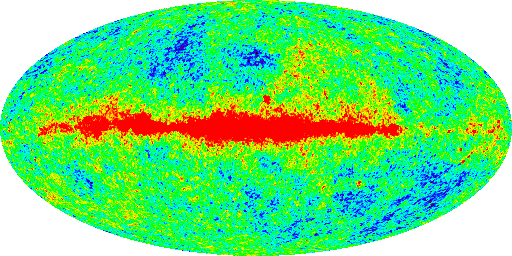
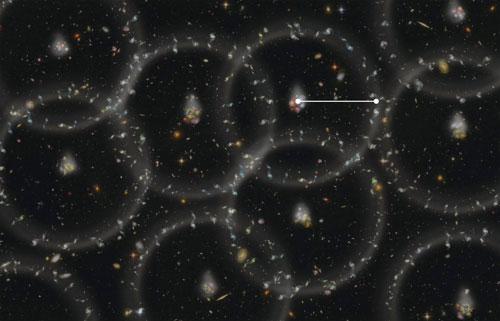
Then, 380,000 years after the Big Bang, the universe cooled below about 3,000 K. Electrons and protons combined into neutral hydrogen atoms. The plasma became transparent. The sound waves stopped dead — not because anything interrupted them, but because the medium they were travelling through ceased to exist. Those waves are now frozen in place, imprinted on the distribution of matter across the entire observable universe.
Baryonic Acoustic Oscillations: Sound Frozen in the Cosmos
The frozen imprint of those primordial sound waves is one of the most powerful tools in modern cosmology. Cosmologists call them Baryonic Acoustic Oscillations (BAOs).
The key feature of BAOs is the sound horizon — the maximum distance a sound wave could have travelled in the 380,000 years before recombination. That distance is fixed by the speed of sound (c/√3) and the age of the plasma era. It works out to approximately 150 megaparsecs (about 490 million light-years) in today's expanded universe.
This means that pairs of galaxies separated by exactly 150 megaparsecs are slightly more common than average — a preference that survives in galaxy surveys today. Cosmologists use this "standard ruler" to measure how the universe has expanded over time, and to constrain dark energy models.
The Dimensionless Connection: Sound Is the Square Root of Light
Here is where Dimensionless Science makes the relationship visible in a way that standard physics notation never does.
In SI units, the speed of light is 299,792,458 m/s and the speed of sound in the primordial plasma is approximately 173,000,000 m/s. These look like two unrelated large numbers.
Strip the units. In the Dimensionless Science framework, c = 3. Then:
- c_sound = c / √3 = 3 / √3 = √3
- Note that √3 = √(c_dimensionless)
Sound speed in the primordial universe is the square root of the dimensionless speed of light. The relationship c_sound = √c_light is exact, and it is completely invisible in standard notation.
The number √3 is not arbitrary. It is the defining ratio of the Vesica Piscis — the lens-shaped intersection of two circles, one of the most fundamental constructions in classical geometry. The long axis of the Vesica Piscis is exactly √3 times its short axis.
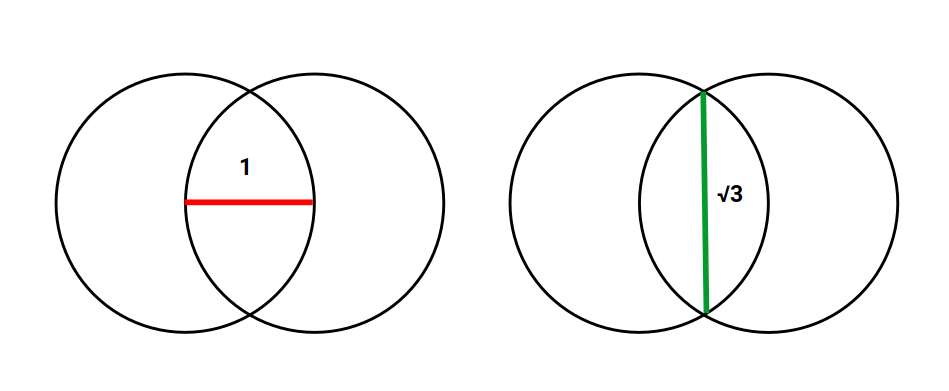
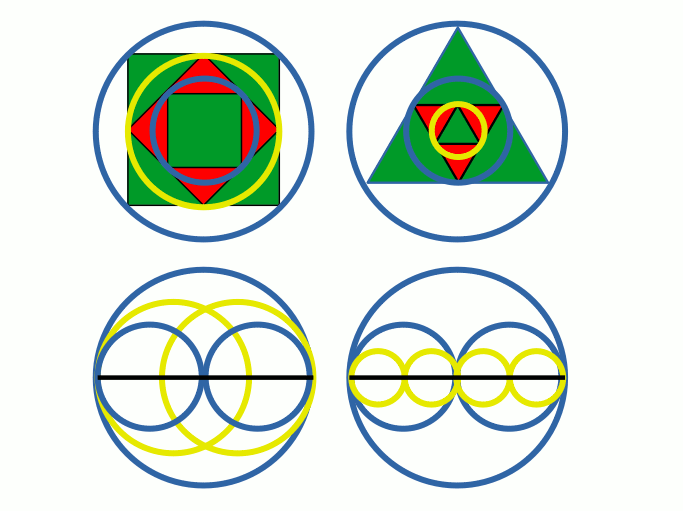
The same √3 appears in: - The geometry of the equilateral triangle and regular hexagon - Hexagonal close-packing of atoms in crystals - The electric and magnetic field components of certain wave solutions - The proton-to-electron mass ratio approximations in Dimensionless Science
Watch: The Sound and Light Ratio Explained
The Musical Analogy
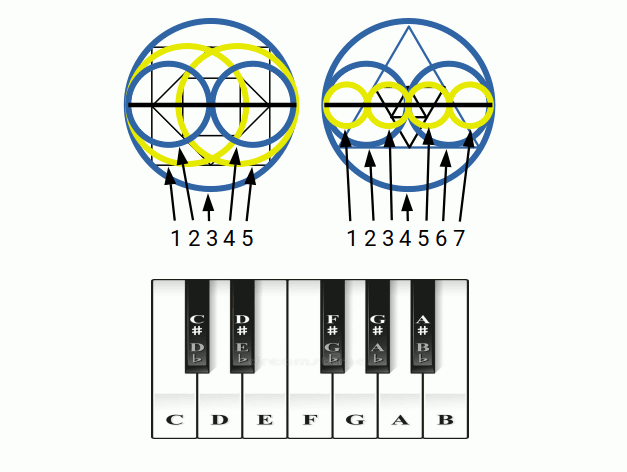
There is a further layer to this relationship. Sound is also the basis of music, and music is built from frequency ratios: the octave is 2:1, the perfect fifth is 3:2, the perfect fourth is 4:3. These are the same small integer ratios that appear throughout atomic geometry and crystalline structure.
The speed of sound in the primordial plasma is c/√3. The √3 is precisely the ratio between the height and the base of an equilateral triangle — the geometric foundation of the musical perfect fifth (frequency ratio 3:2, spatial ratio √3). Sound and geometry share a common numerical language, and that language extends all the way from a vibrating string to the structure of the early universe.
Conclusion
The relationship between sound and light is not simply a matter of one being faster than the other. In the right medium — the hot, radiation-dominated plasma of the early universe — sound travels at c/√3, the theoretical maximum for any acoustic wave. Strip the units from that expression and you get something remarkable: sound speed equals the square root of the (dimensionless) speed of light.
That relationship left its mark on the structure of the entire observable universe, in the form of Baryonic Acoustic Oscillations — the frozen imprint of cosmic sound waves that now serve as a standard ruler for measuring cosmic expansion.
And the number that connects them, √3, is not exotic. It is the defining ratio of the Vesica Piscis, one of geometry's simplest and oldest constructions. Sound, light, and the large-scale structure of the cosmos all converge on the same geometric proportion — suggesting that these are not coincidental numerical relationships but expressions of a deeper geometric order.
For the broader programme of deriving physical constants from geometry, see why the speed of light is constant, why light has no mass, and the Dimensionless Science theory pages. For the cosmological context of BAOs, see what is the Cosmic Microwave Background?
FAQ
Can sound really travel through space?
Sound cannot travel through empty vacuum — it needs a medium to propagate. But space is not always empty. In the early universe, all matter existed as a dense, hot plasma, and pressure waves (sound) propagated through it freely. Today, sound can travel through interstellar gas clouds, stellar plasma, and the surfaces of stars. The idea that space is silent is true only for the cold, near-empty vacuum we inhabit now.
What are Baryonic Acoustic Oscillations?
Baryonic Acoustic Oscillations (BAOs) are the frozen imprints of sound waves that propagated through the hot plasma of the early universe, approximately 380,000 years after the Big Bang. When the universe cooled enough for electrons and protons to combine into neutral atoms, the plasma solidified and those sound waves froze in place. Their signature is visible today in the large-scale distribution of galaxies and in the pattern of the Cosmic Microwave Background.
Why is the speed of sound in the primordial plasma exactly c/√3?
In a radiation-dominated plasma — where the pressure is provided by photons rather than atomic collisions — the equation of state gives a sound speed of c/√3. This is a standard result of relativistic fluid dynamics. The factor √3 arises because the radiation pressure is one-third of the energy density (the trace of the stress-energy tensor for a photon gas).
What does it mean that sound equals the square root of light in dimensionless units?
In Dimensionless Science, the speed of light is expressed as the pure number 3. The speed of sound in the primordial plasma is c/√3 = 3/√3 = √3. So c_sound = √3 = √(c_dimensionless) = √3. Sound speed is literally the square root of the dimensionless speed of light — a relationship that is invisible in standard SI notation but becomes obvious when units are stripped away.
What is the Vesica Piscis and why does √3 appear in it?
The Vesica Piscis is the lens-shaped region formed when two circles of equal radius overlap so that each circle's centre lies on the other's circumference. The ratio of its long axis to its short axis is exactly √3. This is the same √3 that appears in the speed of sound in the primordial plasma, suggesting that the geometry of space itself encodes these physical relationships.